


Well, I think what happened was, for a long time we had the company over a barrel because we had a closed shop. Once the Thatcher government in effect had dropped that by the 80s and we didn’t have that, and I think Andrew Quinn said we were going to get our own back after…
Read More
Leslie Woodhead recalls how he was recruited by Granada
Going right back to the beginning, how did you come to be employed at Granada? It’s a curious accident and quite simply the most fortunate thing that has ever happened to me. I was in my last year at Cambridge, reading English, and a chum of mine from Halifax, where I grew up, said, “I…
Read More
Leslie Woodhead on how in Granada’s early days, ‘we were having to make up a thing because it didn’t much pre-exist’
I wondered if certainly at the beginning of your career, was there a sense that for most of you, you were kind of novices and learning as you… Yes. And that wasn’t just for you personally. All of us – and I guess that was what was exhilarating about getting involved at the moment I…
Read More
Leslie Woodhead describes the production trainee scheme at Granada in the early 1960’s
At that time, on a faintly regular basis, Granada ran this production trainee scheme, during which they would grab half a dozen graduates from around the universities and put them through a nine-month immersion into TV, which I then discovered what this meant. Partly it was because of the very tight union situation at Granada,…
Read More
Leslie Woodhead remembers his first encounter with the Beatles – and Brian Epstein in 1962
Denis Forman had hired a young filmmaker called Michael Grigsby with a promise to make documentaries, but while we were waiting. Sidney deeply distrusted film. He didn’t want film to happen on Granada’s premises because he rightly thought, “Once I’ve got one unit, I’ll have to have 12.” And he was completely right – quite…
Read More
Leslie Woodhead talks about his role on World In Action in the mid-60’s
But (David) Plowright – who I should have mentioned, since he was always an immensely important person in my life, and remains so – he had been the second producer on People and Places, and he had then gone on and I had worked for him on All Our Yesterdays and What the Papers Say…
Read More
Leslie Woodhead recalls some of the memorable World In Action programmes he worked on in the late 60’s
In that late 60s period, we began to do… well, first of all, Plowright’s idea was that he wanted to pair… the change that he made from Tim Hewat’s time was to try and make it a more filmic series. In other words, he was interested in films that looked like films, as well as…
Read More
Leslie Woodhead on making a documentary about the artist, L.S. Lowry
I had done some early directing on People and Places and on What the Papers Say, and on All Our Yesterdays, I wasn’t particularly seized by studio direction, and I also directed the party conferences that tended to put me to sleep. But I was then yanked out of all that, just at the moment…
Read More
Leslie Woodhead on how World In Action was part of the wider cultural changes in the 1960’s
I think it’s very hard to estimate how fundamental the change was. Certainly we were part of a wave that was going on, which included rock ‘n’ roll and included fashion, and included new theatre and cinema. We were involved with all of that; it wasn’t an accident that the Beatles’ office was only across…
Read More
Leslie Woodhead describes filming ‘The Stones in the Park’ in 1969
The Stones in the Park came about because Jo Durden-Smith, my long-standing chum who was doing these rock ‘n’ roll documentaries, got a call from Mick Jagger himself – he said, “Hey, Jo – you guys have got great cameramen – why don’t you come and film our concert in Hyde Park?” – this is…
Read More
Leslie Woodhead describes how he moved into drama-documentaries
By then, I had moved on from World in Action, I can’t remember the exact dates, but I discovered that I really… I had this 18 months as co-executive producer of World in Action, and it was really useful that I did – because I discovered something important for me, which was that I didn’t…
Read More
Leslie Woodhead recounts his ground-breaking work in drama-docs at Granada
From 1970 onwards, I also got involved with doing drama documentaries, which was another territory I was utterly inexperienced in – I had never directed an actor in my life! Wallington got hold of a smuggled transcript of a trial in a mental institution in Russia, under which a dissident Soviet general who had challenged…
Read More
Leslie Woodhead on Disappearing World, the most intriguing thing he has been involved in as a documentary maker
The main strand, as opposed to individual documentaries, was Disappearing World. That, like most things for me, happened kind of by accident. Was that programme already in existence? Yes, it was. Before I worked on it… Brian Moser started Disappearing World, again, Denis Forman… it was very much Denis’ obsession. He had become very keen…
Read More
Leslie Woodhead describes how easy it was to get the go-ahead for programmes during his period at Granada
It was possible to go through one door and talk to one man and get something okayed. I remember going to talk to Plowright about that Soviet invasion of Czechoslovakia film, and saying, “Here it is.” “Okay, go and do it.” I thought, “Really?” I mean, that was over a quarter of a million pounds.…
Read More
Leslie Woodhead discusses the benefits of working with the same crews
And presumably the kind of experience you are describing about Disappearing World, where there is a small group of people together for 24 hours a day over a period of weeks, really accentuated that. (a sense of share purpose) Absolutely. I mean, in the Disappearing World I did, the crews I worked with over the…
Read More
Leslie Woodhead on the way in which Granada faced editorial challenges
The other thing you’re asking about, the down sides, I remember that Sidney was… there came a moment, just about when I was starting World in Action, they did a film about Freemasonry, which Mike Hodges, the then feature film director, made – and it was one of the very, very few programmes that Granada…
Read More
Leslie Woodhead on why he decided to leave Granada TV
When did you leave Granada? November 1989. I remember… I left at that time because of something Boulton said to me. By then, of course, change was very much in the air and it was plain that Granada wasn’t going to stay as it was. So what kind of things? How did you discern…? Most…
Read More
Leslie Woodhead on the importance of Granada being in Manchester
How important do you think it was that Granada was based in Manchester? How significant do you feel that contribution was to the North West? I think for Granada, the separation from London was terribly important. I mean, rather like the arrogance we felt about being young producer/directors on World in Action, they felt about……
Read More
Leslie Woodhead describes what he believes was the ‘defining texture’ of Granada
Also I think there’s one of your questions about the defining texture of Granada, and I think… I have thought a lot about this. First of all, an awful lot of us worked together for a long, long time. I mean, some of my colleagues over there all those years were people I had worked…
Read More
Kathy Arundale recalls working for Sir Denis Forman
The Sixties. I can’t remember when I left personnel — isn’t it terrible! But I went to Fred Boud, who was then general manager, and, after a very short and enjoyable time working for him, went to Denis Forman. That was 1968. At this stage, Denis Forman would be Programme Controller? He was Programme Controller…
Read More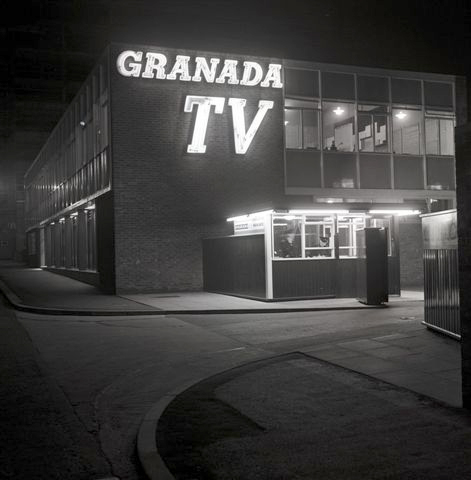
Kathy Arundale remembers how she came to work for Granada and the early days of the company
I joined in May 1957, which was just a year and a few days after the company had gone on the air, and I joined because I wanted to be in the press office, really. I was interested in journalism at that time. A friend of mine, who was working for the chief accountant, told…
Read More
Kathy Arundale’s memories of Sidney Bernstein
Would you have come into much contact with Sidney Bernstein? I did in the early days, yes, because he came up to Manchester regularly to see how the building was progressing and everything else. He used to bring a secretary with him from London, but it was never enough, so they had to have somebody…
Read More
Kathy Arundale’s memories of the production of ‘The Jewel in the Crown’
And were you with Sir Denis when The Jewel in the Crown came? I certainly was. He was very put out to discover that I’d read the novels before he had, because it was a massive piece of reading. And, unlike the way it was done on television, it’s all in timescales, going back and…
Read More
Kathy Arundale talks about Granada’s highly regarded art collection
You looked after the art collection, didn’t you? When did Granada start purchasing paintings, and why? Well, Sidney Bernstein had always bought paintings, and the London offices had them forever. I don’t remember, in my early days at Granada in Manchester, that there were pictures on the walls, but there may well have been and…
Read More
Kathy Arundale describes the work of the Granada Foundation
The Foundation is actually a separate entity to Granada Television, because Sidney and Cecil Bernstein settled an amount of money in what was then called the Northern Arts and Sciences Foundation. The interest from that capital was to be used to help arts and sciences in the north. I can’t remember when they changed the…
Read More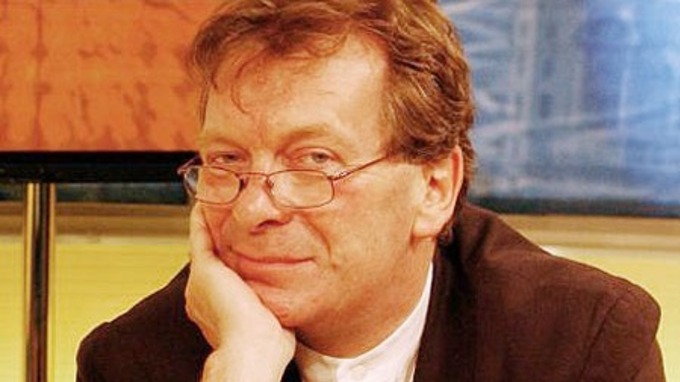
Gordon Burns’ special memories of Tony Wilson
I only did Granada Reports, it was about a year and a half when they changed it, they changed every year – they changed the producer, they changed the music, they changed the set – as new guys, thrusting new guys came in to take over, and they decided to go with a single presenter…
Read More
Gordon Burns talks about the launch of The Krypton Factor and how it changed his career
Let’s move on to The Krypton Factor. That’s the programme you’re most associated with at Granada. Like many things in one’s life, you get breaks you don’t expect to get – they happen in the most ludicrous way, and they change your life. And my break originally into newspapers in Northern Ireland was in a…
Read More
Gordon Burns talks about the emphasis on quality within Granada
What I would say is that there was all that high energy of young people wanting to make a career in television, wanting to shine or wanting to become, if they were researchers, wanting to become producer or director, or indeed a presenter. And that actually gave the programme (Granada Reports)… it might have had…
Read More
Gordon Burns remembers working on World In Action in Northern Ireland and the challenges he and his crew faced
The other thing I should mention, which is another one of my pride areas, that World in Action was the great award-winning, again, pioneering investigative programme which the elite, if you like, in news… most journalists’ ambition was to work on World in Action, and it was left, right and centre award-winning, and tremendous investigative…
Read More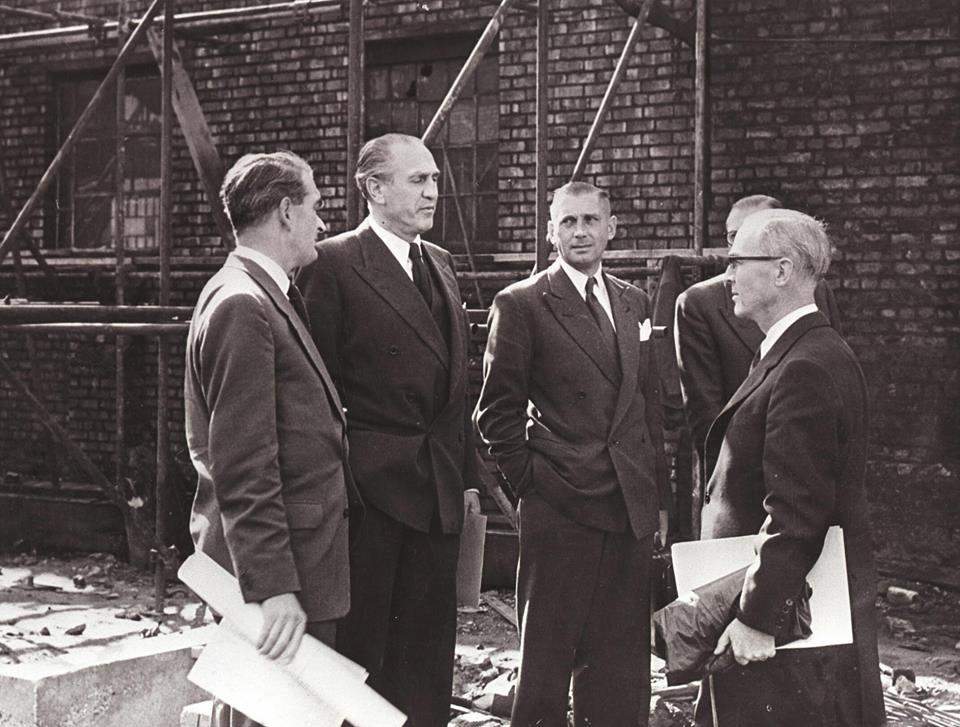
Gordon Burns remembers Sidney Bernstein – and his attention to cleanliness!
Sidney Bernstein. I remember quite vividly, every so often he used to set off round the building, and he had marching in his wake, an assistant who had a clipboard with paper on it, and Sidney Bernstein would head into an office and so on, and bark out things like, “Wall needs painting!” or whatever,…
Read More