


Was it a good company to work for? Yes, I… well I worked in quite a few, although Granada mainly, yes, I found it good. I didn’t have any problems there, you know… we had a few union problems much later, but up to that point, no. I enjoyed working there actually, but I had…
Read More
Jacki Turner remembers working on Game, Set & Match
Jacki Turner is at the far left of this photo with other members of the crew during filming in Berlin. In 1986/87 I started a project that would tie me up for a year – it was 13 episodes of three Len Deighton novels, Berlin Game, Mexico Set and London Match. Len had originally planned to…
Read More
Jacki Turner remembers the Hollywood stars on All For Love
This photo shows members of the cast and crew from this production with jacki Turner in the centre. Another All for Love I worked on was shot mainly in the Adelphi Hotel in Liverpool. The story was that a pair of lovers met regularly in a very large Victorian hotel bathroom and had hanky panky! This…
Read More
Jacki Turner on working with the footballer, Kenny Dalglish
Scully was a six part series about a Liverpool schoolboy called Scully who was obsessed by Liverpool Football Club and its star Kenny Dalglish. We filmed most of it around Manchester in the middle of winter and one night I was asked to travel with Kenny in his car to make sure he knew how…
Read More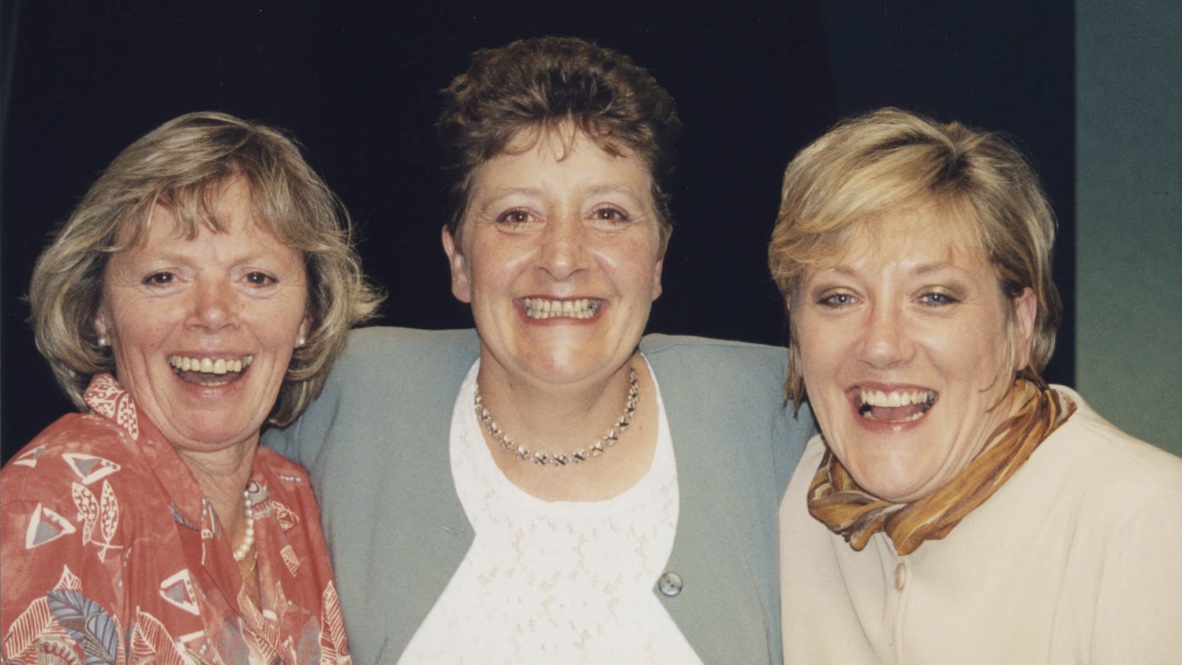
Jacki Turner on the ‘Up’ series
This photo shows Jacki Turner on the left with two participants from the series, Jackie Bassett and Jackie McKinney. In 1992 I was asked to work on an important project called the ‘Up’ Series. This was started in 1964 when the World in Action team interviewed a cross section of children at 7 years old. This…
Read More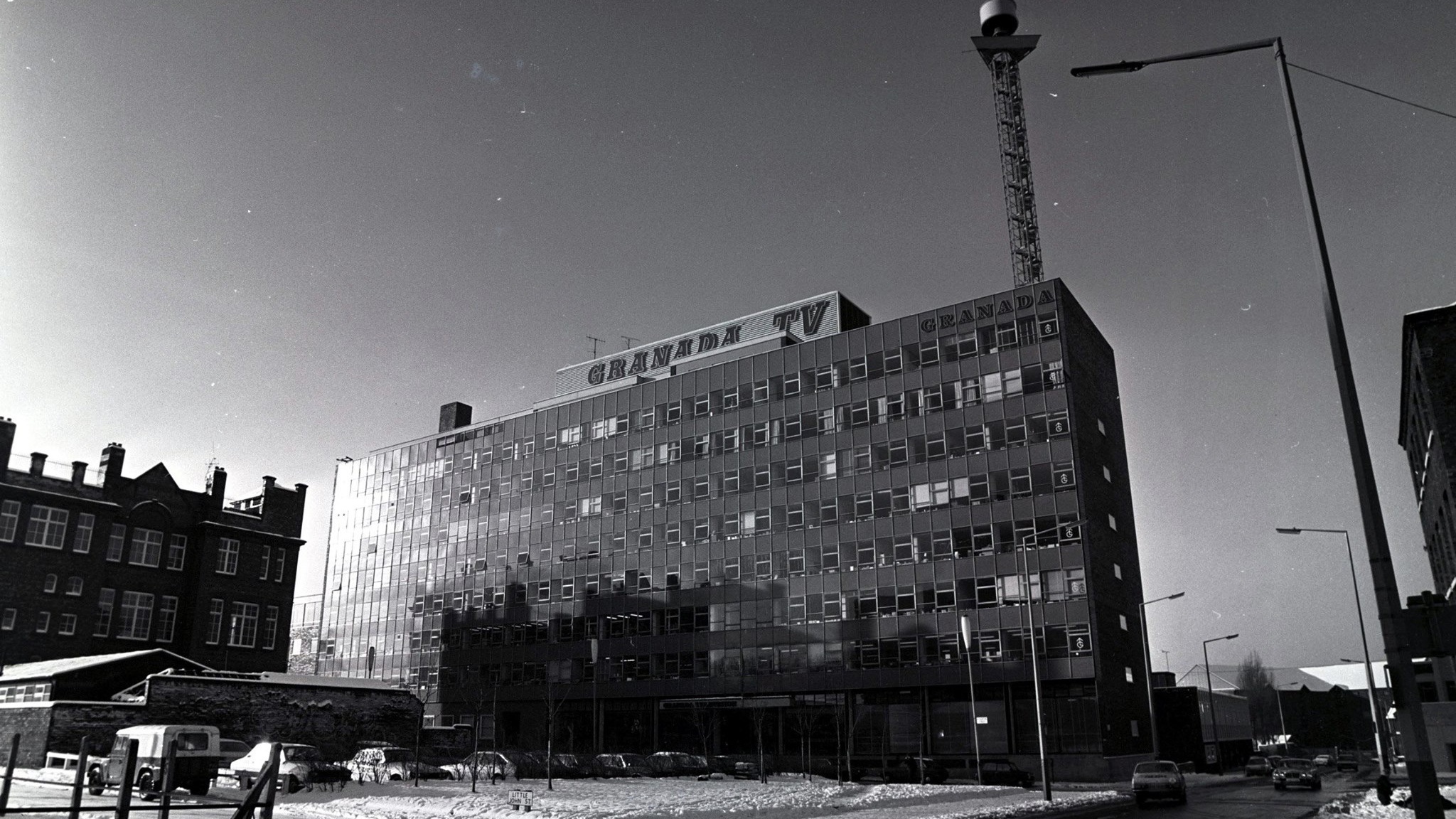
Jacki Turner on leaving Granada in 1991
I took voluntary redundancy/early retirement at the age of 50 in 1991. The writing was on the wall that things were on the change in ITV. This was proved when in 1992 almost three-quarters of script supervisors were made redundant – they only kept on the girls who would act up as Production Managers etc.…
Read More
Jon Savage biography
Jon Savage joined Granada in 1979 as a researcher, initially working on local programmes including This is Your Right. Other credits included Fun Factory and Granada Reports and also worked on pilot for a planned series on music and teenagers. The series was never made by Granada but Jon went on to write the script…
Read More
Jon Savage on his researcher’s board to join Granada
Jon Savage far right with Phil Griffin and Sue Woodward I actually joined Granada in April 1979. But I went for the researcher’s board in November ‘78 and my position was that I was living at home with my parents still, I’m an only child, I was completing a Law Society’s solicitor’s qualification course…
Read More
Jon Savage recalls working on the consumer programme This is Your Right
It took me quite a while to really find an niche, and actually at the time I started, and I didn’t find a niche for very long, because actually what I wanted to do wasn’t on the agenda, and I’m also very stubborn and if I don’t want to do something I don’t want to…
Read More
Jon Savage on his impressions of Manchester in 1979
I just remember it… London was derelict, but only in parts. I just remember… what I liked about Manchester was the space. I always liked urban spaces, one of my problems with London, one of the reasons I left London, was because all the space was filled in. And one of the things that I…
Read More
Jon Savage on his relationship with Tony Wilson
Well, Tony and I worked on another… we were always working on things… in retrospect now, and I piece it together, actually I was always working on things that never worked. I did three pilots for possible programmes and none of them got made, so that in itself is indicative. The first pilot was in…
Read More
Jon Savage remembers the Granada canteen
I seem to remember not minding the canteen. I mean, I’ve always been into practical food. I didn’t like the canteen. I just remember… I remember being in there once and we had a group called Dead or Alive in, Pete Burns, and he was not the total outrageous Pete Burns as we know,…
Read More
Jon Savage on Tony Wilson, music and Granada
I saw Tony is a very complex person. I thought he was a genius presenter and have an enormous respect for that. I thought he was… I thought with Janet Street Porter, he was by far… those two were the best presenters in the UK because they did something beyond just parroting, reading off autocue.…
Read More
Jon Savage on Granada, politics and the north west
Somebody has described Granada as being ‘unashamedly left-wing’. Yes. I thought it was left-wing in conventional political terms. I perceived it as being very, very conservative in social terms. So would you like to… Yes, I would have to explain that. Obviously – and I’m very glad it was left wing because that was a…
Read More
Jon Savage on Granada’s Liverpool office
So when you worked in Liverpool, tell me about your impressions of the Liverpool office. Well, I must have worked on Exchange Flags twice, I can’t remember how long I was there for, I must have been there for at least six months, and of course Liverpool was really the poor relation and it was…
Read More
Jon Savage on changes in the TV industry
I think Granada was going to go through a downscaling period pretty much after I left, which is December ‘82. So could you see the signs of the changes? Not yet, no. But I did very quickly afterwards, because I went to work at TV-AM, which was another television disaster. I just regard my time…
Read More
David Bernstein – biography
David Bernstein is the son of Lord Sidney Bernstein. Although he worked in television, at Granada, for only a brief spell (during a summer vacation), he is nonetheless well versed in the life and times of Granada Television and his father’s role in the company. In particular he met many executives, actors and friends of his…
Read More
Dorothy Byrne on how she joined Granada
I was working on the Northern Echo and I saw an advert in the Guardian for a researcher. I applied, and I found it very interesting that, when I think back, that this was an advert for the Guardian for a staff job in TV, and how that just doesn’t happen in that way any…
Read More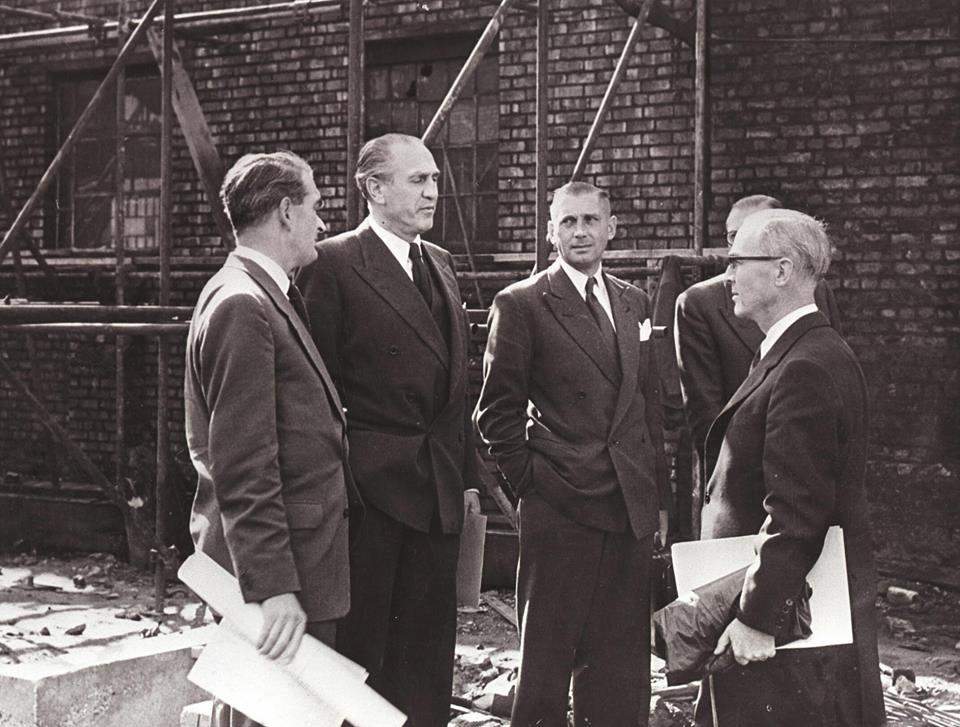
David Bernstein on why his father chose the north west for his TV company
He and his brother Cecil looked at a population map for the United Kingdom, and the rainfall map of the United Kingdom and decided, when they were choosing which of the franchises to bid for, that the north west would have most people at home on a rainy evening, ready to watch their programmes, and…
Read More
Sidney Bernstein as a risk taker
I wasn’t aware of the fragility of the company’s finances – very few people were aware of the deal that was done with ATV and Rediffusion, I only read about that in the book years later. The little bit of indiscretion which I probably will allow myself, because it’s all a long time in the…
Read More
Dorothy Byrne on working on Granada Reports
Granada Reports… was really, really a good programme, and within a very short number of weeks I was out making 10-minute films myself, and I just thought it was absolutely fantastic, and because we made, in Granada Reports, investigative films. I did a film investigating how bed and breakfasts in Blackpool were taking money from…
Read More
Dorothy Byrne on the Channel 4 programme ‘Union World’
Then I went to work on Union World, and I had to pass a test to work on Union World. So I was called in by David Kemp – many people said, “I don’t know why you don’t work on Union World, because you’re Scottish,” and there seemed to be at Granada, as they called…
Read More
Dorothy Byrne on working on World in Action
I went to work on World in Action as a researcher, and that was fantastic. Although we were called researchers, anywhere else we would either have been called assistant producers or producers, so it was a bit of a misnomer. Because we were either given an idea or we came up with the idea ourselves,…
Read More
David Bernstein on his father’s ethical and political beliefs
One of the things that is his legacy, I think, which he was… he created an atmosphere where the successes at Granada Television could take place. The quality of the people that he brought into the company, the standards that he set, the ethos of fierce editorial independence for all the programme makers… all of…
Read More
Sidney Bernstein’s relationship with the Labour Party
Well I’m just going to remind myself that you asked about the extent to which Granada might be seen as the public face of Sidney Bernstein’s politics. And in order to find an answer to that question, I went back to sketching the period that his life spanned, and by the time Granada began broadcasting,…
Read More
Dorothy Byrne about women working on WIA
Of course one of the things was, when I got my job on World in Action, I was at that point the only woman on the programme. So it’s not that women hadn’t worked there before, they had, as it happened at that point I was the only woman. And I always remember the first…
Read More
Sidney Bernstein’s later years
Well, I think it was as well that a lot of that happened after he was really aware of what was going on. I think, you know, all good things come to an end. There were lots of external factors that were involved in the changes to the independent broadcasting scene. Not all of it…
Read More
Dorothy Byrne recalls her favourite programmes
I never had any disasters with programmes! Because when you realise that the story isn’t turning out you turn it around another way. No… I mean, I worked on a huge range of programmes from a programme about women being scared to go out at night – and that was actually Stuart Prebble’s idea, that…
Read More
Sidney Bernstein’s legacy
One aspect of his legacy which I have been personally involved in is the completion of restoration of the film that he began making in 1945, a documentary about the concentration camps, and there’s an extraordinary story there which is well covered in Andre Singer’s interesting documentary Night Will Fall, which was part-funded by…
Read More
Dorothy Byrne on some interesting phone calls!
The way that we operated in terms of rights to reply and due impartiality was very different then. When I was a researcher I worked on a two-part World in Action special on Kurt Waldheim, who had been accused of war crimes. And after the first programme went out, the Austrian Embassy – he was…
Read More