

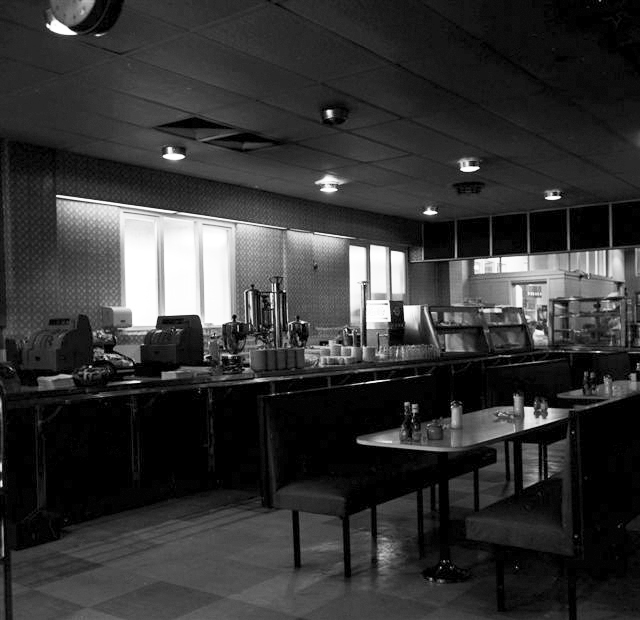
Inside the building, your duty of care almost, the canteen was the fantastic heart of the building, in its very first incarnation the canteen sat as a building that jutted out into the car park at the back of Granada and it was an L-shaped building with sort of banquette type booths that you could…
Read More
David Liddiment on the strengths and weaknesses of GTV
Okay. Granada Television – strengths and weaknesses, looking back, as a company. Well, I think it’s great strength was its singularity as a company, its willingness to go out on a limb for programmes – legally and creatively – famously over British Steel and so on… and also singular because of the way it…
Read More
Michael Ryan on Granada’s relationship with the North West
What was interesting about the local programming was that apart from university I hadn’t really lived outside London and being in Manchester was actually quite an education for me. The sixties were the last decade of Manchester as the industrial city. The buses to Old Trafford used to be choked at 6:30 in the morning…
Read More
Maggie Coombes recalls how she came to be employed by Granada TV
I’d done a postgraduate course at Bristol University in film and television, and I just wrote round to all the television companies I could think of, this is who I am, I’ve done this postgraduate course, I’ve been at art college for four years before that, I’ve done a three-dimensional design course, I’d like to…
Read More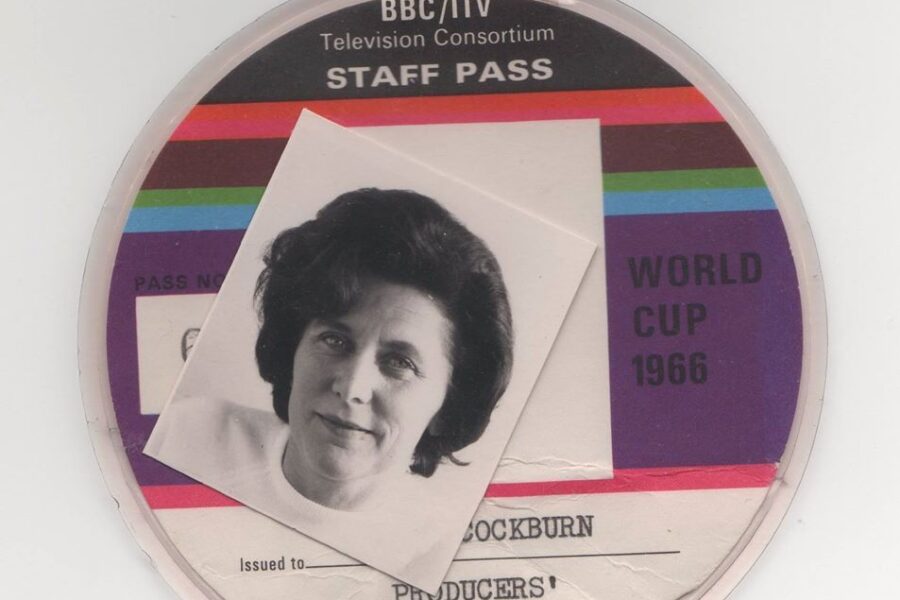
Roland Coburn describes how his parents’ careers at Granada influenced him
And your mum and dad had worked in Granada as well? Mother was, in fact, David Plowright’s secretary, in the very early days, and also helped Sir Denis Forman out as well. Then she became a PA. Father was a researcher on Scene at Six Thirty — or People and Places, as it started —…
Read More
David Boulton’s memories of ‘Scene at 6.30’
I was a very poor press officer because I wasn’t any good at publicising things and being a PR man and after a fairly short while (I think about a year) Sidney summoned me and said, ‘How are you getting on?’ and I said “I hope I’m doing alright.” And he said, ‘Well, I think…
Read More
David Highet describes how the programme ‘Flying Start’ came about
Flying Start was the notion of David Plowright. What happened after the riots is that Michael Heseltine came to Liverpool. He’d been appointed by Margaret Thatcher as Minister for Merseyside and I have to say he did an extraordinarily good job and that was a view shared by politicians of all complexions. Heseltine came and…
Read More
David Highet on the origins of Granada’s office in the Albert Dock
Yes, well one thing that you might want to think about discussing – or for me to remark on – is what Granada’s lasting legacy was in Liverpool and later in Manchester which brings me to the decision to open a News Centre at the Albert Dock in Liverpool. The Albert Dock had been derelict…
Read More
David Boulton describes how ‘World In Action’ operated in the 1970’s and the team that supported the journalists
At any one time there was somewhere between 12 and 15 (maybe even a few more) producers, directors and researchers on World in Action and, of course, we had very regular meetings to discuss programme ideas and there was a quite fierce competition among the producers and researchers to put forward ideas that they would…
Read More
David Highet remembers the importance of Barnum!
I became Head of Public Affairs for the company in Manchester. I’d say that Sidney Bernstein, Denis Forman and David Plowright were three of the most charismatic, impressive, creative, commanding, engaging people I’ve ever met and ever worked for. They became mentors and heroes for me, particularly David with whom I worked very closely when…
Read More
David Boulton describes his experiences of making films in Northern Ireland for ‘World In Action
The two strands that I tended to make my own were films in Northern Ireland (that was the first one) because the so-called ‘Irish Troubles’ or the ‘English Troubles’ as far as the Irish were concerned were all bubbling up at this time from 1969 onwards and I had a peculiar ‘in’ into Northern Ireland…
Read More
David Highet on working as Head of Public Affairs
I moved from that (General Manager at Granada, Liverpool) when David Plowright became Chairman, I think it was 1986. I’d become very ill in the middle of 1986, which is unlike me because I don’t do illness and I managed to get back in time for the Christmas party – we always had a huge…
Read More
David Boulton on the renowned Steel Papers ‘World in Action’ programme
What happened was that there was a strike at British Steel. British Steel was still a nationalised company and there were rumours that the management end of the dispute was being dictated by the Thatcher Government and these rumours were very strongly denied by the management of British Steel, Charles Villiers, the Chairman of British…
Read More
David Highet describes how he thinks Granada changed in the late 1980s
Things began to change towards the end of the 1980s. It’s a question of ethos and I think I would just like to quote from Ray Fitzwalter’s book – The Dream that Died, the Rise and Fall of ITV – and there’s a quote here quoting Bob Phillis, who was the Chief Executive of Carlton…
Read More
David Boulton reflects on the challenges of managing the ‘World In Action’ team
You’ve talked a little bit about the eclectic bunch of people who worked on World in Action. What was it like being editor of that programme and having to deal with these very clever but also people who could be very awkward, shall we say, to work with? Yes, you’ve put it very well. They…
Read More
David Boulton on how he valued the support of his cameramen and film editors on ‘World In Action’
When I joined World in Action (in 1969) the two newly appointed editors of World in Action, joint editors, were John Birt and Gus MacDonald. John Birt was, I think, only about 23 when he was appointed editor of World in Action and Gus was a little older but had already begun to make his…
Read More
David Boulton on the challenges of making films under-cover
Another strand of films that I got involved in but I think this was really something that Gus MacDonald initiated was we needed to meet the criticism that it was very easy for us to go out to the United States, say, a very, very free country and make films very, very critical of the…
Read More
Tony Drinkle talks about when he left Granada
I left in 1989, just when… it was when the voluntary redundancies… I was 49 at the time, and funnily enough me and Jack Dardis left on the same day as well! We started on the same day in 1956 and left on the same day in 1989. So they were asking for redundancy and…
Read More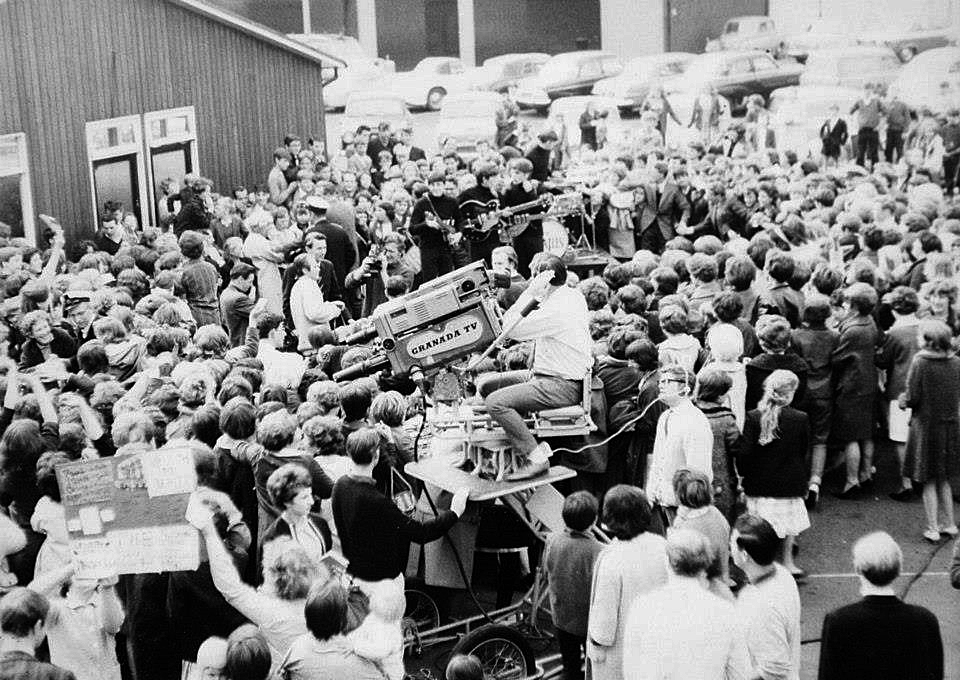
Janice Finch remembers as a nine year old trying to meet the Beatles at Granada
I forgot to mention that I had of course actually breached the walls of Granada television in 1963 as a nine year old when the Beatles were supposed to be appearing live on their Friday night show. It was a summer holiday so it must have been August 1963 and I’d gone with a girl…
Read More
Michael Ryan compares Granada to the BBC
The BBC responds to competition, so the BBC in one period will be different to the BBC or Granada in another period. Perhaps I’ve tilted it more in terms of the Sixties and Seventies, but I do think that the central model is rather like putting on play, you only need a producer, a director…
Read More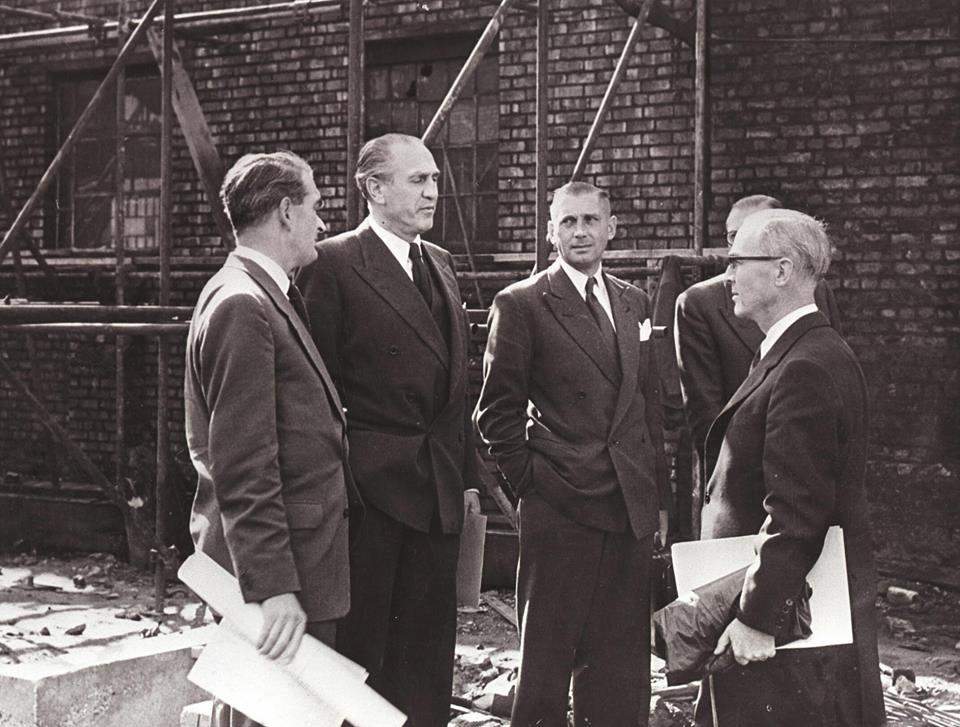
David Boulton’s impressions of Granada as a company
First of all it was a family company. The Bernsteins were the bosses. The Bernsteins made the decisions. Sidney was the one with the social conscience who determined that Granada would be better than the BBC [British Broadcasting Company] at producing its news programmes, its current affairs programmes, and in developing a social justice direction.…
Read More
David Boulton on ‘What the Papers Say’ and encountering Nigel Lawson
Of course, producing What the Papers Say was great fun as well. It’s amazingly still going. It amazingly still has the title music that I chose for it! That was a very simple job. I mean it just involved having a team of regular presenters across the political spectrum. I remember one of the presenters…
Read More
David Boulton on the introduction of Electronic News Gathering
Another thing that you did when you were head of current affairs was the introduction of the new technology in Liverpool, ENG [Electronic News Gathering], and the new technology high-tech newsroom. Yes, that was a nightmare because if there was anybody in Granada who knew less about computers than I did, I’d have been interested…
Read More
David Boulton on how he contributed to the rise to power of Margaret Thatcher
It was Linda MacDougall, the wife of a Labour MP, who was the producer on World in Action who came to me and said, ‘Look, Margaret Thatcher is challenging Ted Heath for the leadership of the Conservative Party.’ We all thought this was a great joke that this woman, who had not made a…
Read More
David Boulton describes what he thinks is his personal legacy through his programmes
You were talking about how you aimed to be impartial and I was interested that you were somebody, I think, who came to television with strong political and ethical principles and I wonder if there are examples that you felt that through your programme making you had perhaps changed or influenced peoples’ perceptions of issues…
Read More
David Boulton describes the ethos of Granada
Granada was built on the fact that there was a very, very close editorial connection between the people at the top and the people at the bottom. I mean the people in the middle, the producers worked directly to Dennis Forman, Sidney Bernstein and you made your decisions in accordance with what you felt they…
Read More
Geoff Moore on how he joined Granada TV
I joined Granada in January 1969. I’d just graduated from Liverpool University, did a second degree in politics there. I came out after four years at university (Birmingham and Liverpool) vaguely wanting to be a journalist. I mean I’d done a lot of politics and I liked writing. I’d come from a left-wing family. We’d…
Read More
Geoff Moore describes the range of musicians he worked with on So It Goes
My second show as a producer was So It Goes. So from World in Action I went to So It Goes. That’s a big leap! Yes. It was, wasn’t it? Six months on So It Goes. My music background helped me get this maybe. So It Goes became a cult hit – still is –…
Read More
Geoff Moore remembers working in comedy with Kenny Everett
So I found myself going into comedy as the first job, which is not at all my background or my bent. Mind you, I was young and this was great! You know, who cares what it is! You are working in television and you go out filming with Kenny Everett, you travel and they get…
Read More
Geoff Moore recalls his first stint on World In Action
By July or August 1969 I was in World in Action with John Birt. In the summer of 1970 I left Granada to become a rock and roll star! But my first period on World in Action was late summer ’69 to the middle of 1970 in which time I researched three World in Action’s.…
Read More