


Tell me about the relationship between the camera person and the producer/director. Very important. Most of the producers I ever worked with I’ve always – again, it’s a story I’ve mentioned a few times, but not today – when you meet a producer at Los Angeles airport, he’s maybe been over there for two weeks,…
Read More
George Turner on the importance of Granada being in Manchester
I think it’s well-known that the Bernsteins were looking to have a television station in the north of England. I know for a fact they looked in Liverpool as well as in Manchester. And in fact they looked in Manchester out towards the Toast Rack site, but think it’s been documented that they realised, the…
Read More
Don Jones on his first impressions of the sports department
The first day was really amazing because I was given a desk, and I was told that me and another guy had been taken on at the same time, and one of the lads in the office said I’d been described as the hardworking journalist who would bring some kind of proper sports reporting to…
Read More
Don Jones remembers Paul Doherty, head of sport at Granada TV
Doherty would just not accept anything that was mundane. The great example of his need to make it different was that, I remember one week on a Thursday one of the items for the following day’s programme had fallen down for some reason – somebody couldn’t do something – and he walked into the office…
Read More
George Turner on his work on the Up series
We’ve obviously just been talking about the World in Action series, which I’m obviously very proud to have been involved with for as long as I was; ’66 to 1998 was a long time. Alright, there were a few little diversions off it for different programmes, one of which was the Up series. It started…
Read More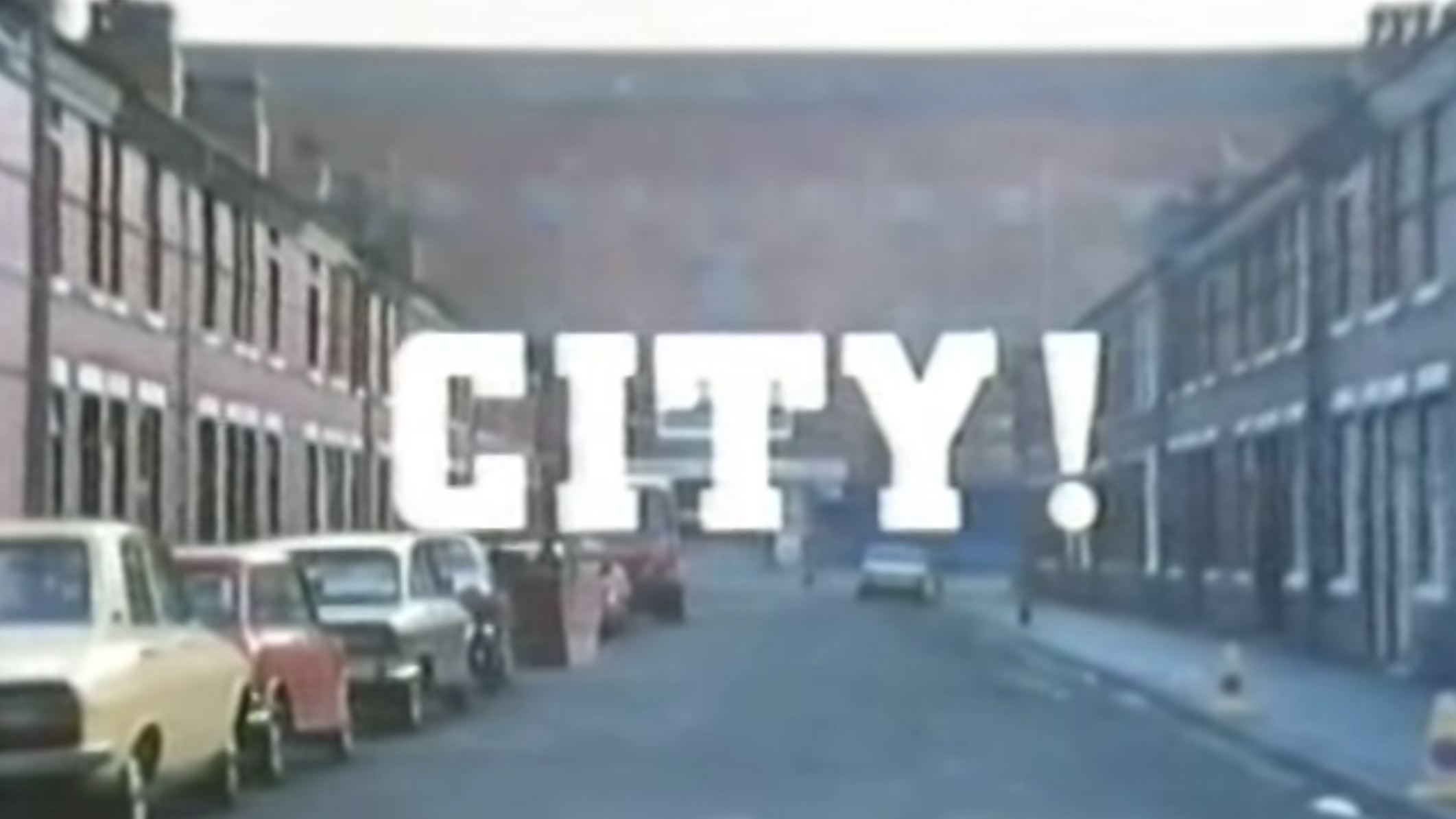
Don Jones recalls working with Peter Carr, the director of City
Before I went into LE and worked for Steve Leahy, I had a spell working for Rob Caird in the features department as a researcher. I worked on network documentaries, the main one being Robert Millar – The High Life, which was a documentary about a Tour de France cyclist from Scotland who had been…
Read More
George Turner comments on changing technology
I wondered how the changes in technology have affected your role. Has it made it easier? I think it’s a journey that’s taken place over very nearly fifty years. So when I embarked, and talking about cameras that weighed over 42 lbs. and were powered by 12 volt car batteries and things like that, and…
Read More
George Turner on filming distressing scenes
You were talking about filming in war zones and seeing very traumatic events. Did that take an emotional toll on you? Because obviously, it was probably physically tiring during that, but you recover from that, but seeing those kind of things and having to film them? Well I think that it’s interesting now when you…
Read More
Don Jones on working on ‘a dream come true’!
In the summer sometimes we were loaned out to regional programmes, so you got to work on other types of programmes. And also at this time, Steve Hawes and Bruce Macdonald had decided to make a series called Rod and Line, which was a dramatisation of Arthur Ransome’s angling essays. Arthur Ransome is famous for…
Read More
Steve Morrison recalls winning two Oscars with ‘My Left Foot’
So there is a story I must tell you about My Left Foot. By the time the Oscars came around, we had completed the film, and I had been promoted again – which is a whole different story – from the head of Granada Film to the Director of Programmes at Granada, which meant that…
Read More
Steve Morrison’s memories of making the film ‘The Magic Toyshop’
So David Wheatley and I had worked together, and we decided to make a film about one of Angela Carter’s books, and the one we chose was called The Magic Toyshop. Angela Carter was in Texas, lecturing, so David and I got on the phone, which in those days seemed a very long way away,…
Read More
David Liddiment on how he always wanted to work in TV
As you started university, what did you want to be? I wanted to work in television, and I had wanted to work in television since I had been a teenager. I loved the telly – I was born in 1952, I am a child of the television generation in the way that kids born today…
Read More
David Liddiment describes how he joined Granada TV
I joined Granada as a promotions scriptwriter. Joe Rigby hired me, and the only reason I got the job was, having applied for it before, I decided to apply for it again because I didn’t get it the first time round. Unbeknownst to me, I had narrowly lost it the first time around, so…
Read More
Barry Bowmer’s memories of the productions in the early 60’s
I wanted to get into production and as there was a studio at Chelsea I applied and got a job there which started in the mailroom and shortly afterwards I went as callboy which obviously involved all the shows that were put on there. And there were lots of them. Such as? Massive productions. Well…
Read More
David Highet on how he came to be employed at Granada
It was 1979 and I was 38 and I was Assistant Editor of the Liverpool Echo which was at that time probably the biggest regional evening newspaper and I was getting a little restive. I’d spent 20 years in local newspapers, local journalism, and I felt it was time for a move but I wasn’t…
Read More
David Liddiment on moving from promotions to being a researche
I decided, having been there a brief while, the thing I wanted to do was direct, you know, sat in the back of the gallery producing a promo session – we used to run the trails through the gallery and we used to put the captions on with a manned camera crew on the studio…
Read More
Barry Bowmer describes his first job at Granada in London
Well, I had various jobs where I lived in the south. My father who was a tool-maker at the BMI could see that going downhill so he persuaded me not to go into engineering and there were various jobs at London Airport (or Heathrow as it’s now known) and eventually my uncle, who used to…
Read More
David Highet on Granada’s rationale for opening a Liverpool office
At the time the long-standing antipathy between Liverpool and Manchester focussed – even more greatly than usual – on the lack of a television station in Liverpool while Manchester had the TV centre in Quay Street in all its glory and different organisations began to form. One of them was led by a Professor of…
Read More
David Liddiment on working on local programmes
So what was your experience of working on regional programmes? I did everything on regional programmes. How did you find it? I loved it. Because one, Granada regional programmes was a very vibrant place, it was led by Steve Morrison, it was the first time I got to work with Steve, Steven Morrison… you know,…
Read More
Barry Bowmer on Granada’s early days in Golden Square
Was Golden Square at that point the headquarters for the entire Granada Group? Yeah I’m sure it was 4 storeys and a basement and then whilst I was working there they built another 2 storeys on top but it was taken up wholly by Granada, you know for television etc. Another place that we used…
Read More
David Highet on Granada’s first premises in Liverpool at Exchange Flags
The premises had been found in what turned out to be the most unsuitable location. The studio centre was in Exchange Flags, which is a set of very fine office buildings set on a piazza, the other side of which is completed by Liverpool Town Hall and the centre of which is dominated by what…
Read More
Barry Bowmer remembers travelling in style with the Bernsteins!
You got to know the Bernsteins in Golden Square. Did you keep contact with them later on at all? Did you come across them? No. I got to know them. We knew each other but we weren’t that close, myself being a mail boy, callboy. It was just through frequency of working with them and…
Read More
David Highet remembers Granada’s first broadcast from Exchange Flags
June 1980, it took few months to get all the bits and pieces put together and have a few dry runs. I remember Roger Blyth presenting the first news programme from Liverpool which was very exciting and it was made rather, even more interesting because the shot of the presenter looked out across the studio…
Read More
David Liddiment talks about moving into management
For someone of your background as a promotions scriptwriter and a researcher and director and producer, you had done a lot of making, but you ended up a suit. Yes. How did you feel about that? I loved it. I loved it. I have been very fortunate to have the opportunity to have my eyes…
Read More
Barry Bowmer describes his role in Film Ops in Manchester
And you moved up to Manchester to become…? I went into Film Ops. Film Operations, which was under Bill Lloyd and did various parts of jobs there initially. Some film library, again messages to the labs. Humphries Laboratories which used to process film which was quarter of a mile away, used to go backwards and…
Read More
David Highet on the special atmosphere at Granada’s Liverpool base
I felt I had no especial need to foster a family feeling because the good people we had there were already doing it themselves. The way in which people got on with each other was a great pleasure to see. It may have been something to do, unwittingly, with our recruitment process because as…
Read More
David Liddiment’s memories of the soap Albion Market
I loved directing. When I was in it, in the middle of it, I couldn’t envisage doing anything else – but bit by bit I started to get a bit frustrated, because you are… you are inevitably directing other people’s visions, things they want to do rather than things you want to do, and I…
Read More
Barry Bowmer on the role of the film editor
OK, so you become a film editor, tell us something about the role of the film editor. What does a film editor do? Well a film editor, director, producer, cameras etc. go out and shoot whether it’s a drama or documentary and then it comes back into the film editor who in agreement with the…
Read More
David Highet recalls how the programme ‘Exchange Flags’ came about
We were doing news inputs. Granada Reports was edited by Rod Caird in Manchester and anchored by, I think, Bob Smithies, and Tony (Anthony) H. Wilson and Greavsey, Bob Greaves and various other very experienced folk. Roger Blyth who worked as a journalist, a freelance journalist on Merseyside for many years, fell naturally into the…
Read More
David Liddiment talks about ‘Stars in Their Eyes’
Stars in Their Eyes, am I right, it was Granada’s first big entertainment hit for a while at that time? Yes. But it wasn’t a home-grown show. No, it was a Dutch show, it was a Dutch format – in fact it was Steve Leahy who, you know, was a genius in spotting these formats…
Read More