


I made a big pitch at my interview about children’s programmes, because inevitably I was a mother and I sat and watched this ghastly stuff. And I didn’t realise that Steve Leahy was just about to revamp the children’s department. And I was promised that I could work in children’s, but it didn’t happen, of…
Read More
Luise Fitzwalter describes the innovation on Open House
We created something called Open House for North West Parliament, which was a brilliant idea where we used the House of Commons set that Granada had and we invited local MPs from the north west, and the retired deputy speaker who lived in the north west, and they debated issues like education, health etc. They…
Read More
Luise Fitzwalter on Granada’s coverage of the Hillsborough tragedy
I mean, what happened to me with Hillsborough was that we…no mobile phones. We had these zapper things, can you remember, they buzzed to tell you to ring somebody. And it so happened that I kept them my children have their first professional haircut at Kendal’s that afternoon and I turned my zapper off.…
Read More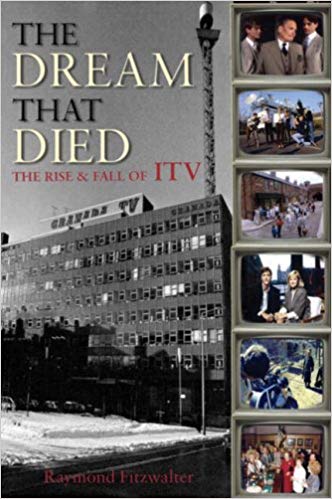
Luise Fitzwalter on the end of her Granada career
Let’s just continue with your career, to where your career ends at Granada. Huh. Right, well… I suppose I’m still very angry about it. What happened to Ray particularly. I think two people suffered the most from the whole debacle when Gerry came in, Gerry Robinson and Charles Allen, and one was Plowright and one…
Read More
Luise Fitzwalter on the change of culture at Granada
Apparently Charles Allen, when he gave this presentation to the board, said, “What you do,” and this is what they used to do on Granada’s… and this is hearsay, I heard this story ……“What you do is you squeeze the client, as it were, until the pips squeak. And if, when they start complaining that…
Read More
Luise Fitzwalter on attitudes towards her as a woman at Granada
The worst person was a female news editor. I came in as a married woman returner, and I had been doing various degrees at Bradford, I did an MA and a PhD. And then I came to Granada. They were poisonous. Utterly poisonous. I mean, she was, with her coterie of people. And they would…
Read More
Luise Fitzwalter on the great pool of talent at Granada
The great thing about Granada, as I said, was the great can-do attitude, and they had this phrase, “Let’s do some mischief.” So that that was hugely exciting and creative. But the biggest thing about Granada was the pool of talent. And you never got trained, but what you did was you worked with the…
Read More
Luise Fitzwalter on Granada’s cultural identity
Do you feel that Granada was more than just a television company in terms of its cultural identity? It wanted to be. I had an argument when I was on news with the powers that be because I said that I thought all our reporters should have a northern accent, a north west accent of…
Read More
Luise Fitzwalter on how her late husband, Ray Fitzwalter, joined Granada
I can tell you about his interview at Granada. He’s told this story many times. He was working… he was on the Bradford Telegraph and Argus, and he had an inspired editor called Peter Harland, who allowed Ray to be everything including the… he was the Bangladeshi correspondent, he was the fishing correspondent, he did…
Read More
Luise Fitzwalter on the WIA programmes that Ray Fitzwalter was most proud of
I know he was very proud of the Gozo programme, which finally nailed Maudling. I mean, he was very proud of the team, you know? And we left, we took the personal BAFTAs but we left the team ones. And we left the team ones on the second floor because the team had moved! They…
Read More
Luise Fitzwalter on the importance of Ray Fitzwalter’s northern identity to him
Was that northern identity important to him? Desperately. Yes. Again, Paul Greengrass said at the award, at the luncheon for Ray’s award, you could see the curl of the lip as you came into London on the train with Ray as you approached Euston – and I think this is what gave him as a…
Read More
Luise Fitzwalter on the programme Union World made for Channel 4
David Boulton, who was a dear friend of mine, ours, really, really took the cream of people who worked on Union World, exactly at the point that he put me in there to run it, to go into his new news organisation in Liverpool. And therefore I struggled from the start with Union World. It…
Read More
Steve Anderson describes how he became a journalist
Well I grew up in a place called Kirkby, which was a big council estate on the outskirts of Liverpool. Newtown. It was where Z Cars was located. They didn’t call it Kirkby in Z Cars, they called it ‘Newtown’, but they used to shoot all their location stuff. My local pub was in the…
Read More
Steve Anderson describes how he joined Granada
What was happening all at this same time, it was the late ‘70s, the Granada franchise was up for renewal. And Granada had got spooked by this man called Terry Smith who ran Radio City in Liverpool. Radio City had started about four or five years earlier. It had been a big success commercially.…
Read More
Steve Anderson on the early days of Granada in Liverpool
So there was a lot of interest in the region, not just representing Manchester, and Granada had to respond to it in some way, didn’t they? They couldn’t ignore it. Correct. Yes, yes. So John and I were essentially getting at least two pieces on Granada. We normally were in the news, so we were…
Read More
Steve Anderson on the eleven week ITV strike in 1979
It was very bruising because I was… Andy Harries and I were the joint FoCs, Fathers of the Chapel, for the NUJ. And because the NUJ was never ever particularly considered a television union, it was a print union, as far as television people were considered. There was no, certainly at national level, there…
Read More
Steve Anderson on how he came to work on World in Action
‘79. The strike happened August, I think. July, August. Yes. Maybe slightly earlier. What we did, actually, we stumbled on what turned out to be a very big story, John and I. It was the death of this man called Jimmy Kelly who died in police custody in Merseyside. With Mike Short particularly, because he’d…
Read More
Steve Anderson describes his early days on World in Action
What year did you start on World in Action? So, I was 22. What was your first show? The first show was about the Yorkshire Ripper. It was the time when those tapes had come out. You know, those tapes that had gone to the West Yorkshire Police, and this man claiming that he was…
Read More
Steve Anderson on how he found the culture at World in Action
The World in Action period, what did you make of the culture of the programme and the people working there? How did you react to all that? I, sort of, loved it. And I loved it, was terrified of it, but also there was part of it I really didn’t like, as well. I think,…
Read More
Steve Anderson remembers the Toxteth riots
It was July 4, 1981, the day I got married. I got married in Gatley. St James’s Church, Gatley. And we had the reception in Alderley Edge, cherry centre all the way, because all the money crowd had come over from Liverpool and there wasn’t just my family, but lots of journo mates as well.…
Read More
Steve Anderson on the glamour of Coronation Street
I was fascinated by them. I mean, all the Coronation Street… I remember taking my parents around Coronation Street, one weekend. It was funny because, talk about crossing the line, that sort of added to this totally different world really. Even when I was a newspaper reporter, at least I was covering my local patch.…
Read More
Steve Anderson describes leaving World in Action – and Granada
I left in the summer of 1984. I had nothing against World in Action. I was actually having a great time on World in Action at that time. But I’d applied for a producer’s job on Granada Reports, which I didn’t get. And I felt really upset about it. I was only 26, but I…
Read More
Michael Ryan – biography
Michael Ryan began his television career in 1963 as a BBC2 trainee, working on Panorama as a studio director. However a chance meeting in 1966 with Michael Parkinson in his father’s London pub, led to him joining Granada as a Researcher. In 1967 he worked on Cinema which, at the time, boasted an audience of…
Read More
Steve Morrison – biography
Steve Morrison joined Granada Television in 1974 while still a student at the National Film School. He would quickly become a producer on World In Action. After making a number of World In Action programmes he moved to local programmes where he became editor of Granada Reports and a few years later became Head of…
Read More
Brian Lapping on how he joined Granada
So that was my first job. I got a job at the Daily Mirror. And then I moved from the Mirror to the Guardian, and from the Guardian to the Financial Times, and then from the Financial Times to New Society, and it was when I was working on New Society, a weekly magazine, I…
Read More
Brian Lapping on producing What the Paper Say
So what did you do at Granada? What were the first jobs you had there? Well, first of all I was put onto local programmes for a few weeks and sort of learned about things, and then I was given What the Papers Say to run, and I remember my first week on What the…
Read More
Brian Lapping’s impressions of World In Action
Tell me how you came to be on World in Action. I don’t think it was anything to do with me. It was simply I was told by Denis (Forman) or David Plowright or whoever, “Will you take over World in Action?” Hah! It’s come back to me. I had a telephone call. I…
Read More
Brian Lapping remembers the GTV series End of Empire (1985)
When I was on the Guardian, my job was largely writing about Commonwealth affairs. I went to the subcontinent and to Africa. I wrote quite a lot of stories about the conflicts Britain was having with the rebels there and the measures that were leading, in effect, quite a number of them moving to independence,…
Read More
Brian Lapping’s gratitude to his colleague, Norma Percy
You worked a lot with Norma Percy over the years. You worked in Granada with Norma didn’t you? And since as an independent? How important has she been in your career? Absolutely crucial. It’s quite freakish. John Mackintosh MP, Labour MP, great enthusiasm for the creation of select committees, very significant figure. At the time…
Read More
Brian Lapping on the Bernsteins and Denis Forman
One of the questions is what did you make of the grand days of Granada and the Bernsteins, and Denis Forman and Plowright? Well, I did get to know Sidney moderately well. Sidney was extraordinary. Very incisive and intrusive and fascinating to talk to. Cecil I didn’t know scarcely at all. But I had quite…
Read More