


I was born at Granada and you grow up the Granada way, don’t you? I think I learned a lot for future life through Granada. I loved the way the Stables worked, and before that, Film Exchange. While I was an assistant transmission controller I was talking to Peter Eckersley in the evenings and really…
Read More
David Liddiment on working on local programmes
So what was your experience of working on regional programmes? I did everything on regional programmes. How did you find it? I loved it. Because one, Granada regional programmes was a very vibrant place, it was led by Steve Morrison, it was the first time I got to work with Steve, Steven Morrison… you know,…
Read More
Michael Ryan recalls how he first came to work for Granada TV
What were you doing before you joined Granada Television? Working for the BBC as a studio director. I was headhunted, or something, for the BBC2 start up. Technically I was a BBC2 trainee from Oxford in 1963, and I spent about nine months on Panorama as a sort of tea boy/researcher. Then I went into…
Read More
Barry Bowmer on Granada’s early days in Golden Square
Was Golden Square at that point the headquarters for the entire Granada Group? Yeah I’m sure it was 4 storeys and a basement and then whilst I was working there they built another 2 storeys on top but it was taken up wholly by Granada, you know for television etc. Another place that we used…
Read More
David Highet on Granada’s first premises in Liverpool at Exchange Flags
The premises had been found in what turned out to be the most unsuitable location. The studio centre was in Exchange Flags, which is a set of very fine office buildings set on a piazza, the other side of which is completed by Liverpool Town Hall and the centre of which is dominated by what…
Read More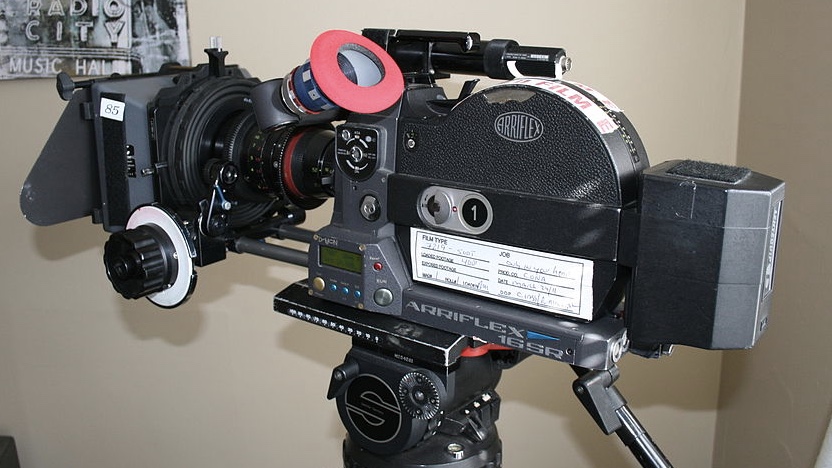
Jon Woods on the technological challenges in the 70’s and 80’s
There’s a lot of responsibility on the camera operators in those early days before video assist and video record and replay. Literally, it was film… if you imagine, during Jewel in the Crown, we were in India for six months, and I think we were there for nearly three months before we saw one foot…
Read More
Jon Woods on the changes in kit and its impact on quality
We’re going to talk about kit. What was it like in the old days and what’s it like today? It couldn’t be more chalk and cheese – talk about steam-generated television! In the era of film, everything was bigger, heavier, more awkward to use. A typical film cameraman’s kit would be a camera body –…
Read More
Steve Leahy on the success of Busman’s Holiday
One of the best moments for me was, we’d done a pilot of Busman’s Holiday, and it was accepted by Granada, by Mike Scott and co., to go to series. And in those days they would dictate and tell the network, “We’ve got a new series for you.” It wasn’t a question of going…
Read More
David Liddiment on working in drama-docs
Then I got a big break because David Boulton phoned me up one day out of the blue and said, “David Plowright has asked me and Leslie Woodhead to set up a drama documentary unit to develop some of the skills and things that Leslie in particular has been doing on World in Action –…
Read More
Brian Blake biography
Brian Blake joined Granada TV in 1966 after a short career in academia. He was initially employed to work on a project where World In Action material that had not been transmitted would be published in booklet or pamphlet form. After nine months however the project was declared unviable and Brian was told to go…
Read More
Michael Ryan recalls working on World In Action
I went to World in Action as a producer/director in the autumn of 1968 and basically I stayed there for ten years and I didn’t do anything else, with the exceptions of oddities like election programmes. But to all intents and purposes I was on World in Action as a producer…. I had the long…
Read More
Barry Bowmer remembers travelling in style with the Bernsteins!
You got to know the Bernsteins in Golden Square. Did you keep contact with them later on at all? Did you come across them? No. I got to know them. We knew each other but we weren’t that close, myself being a mail boy, callboy. It was just through frequency of working with them and…
Read More
Gordon Burns biography
Gordon Burns was one of the best-known presenters on Granada Television during the 1970s and 1980s, presenting programmes such as The Krypton Factor, Granada Reports, Reports Politics and the annual party conferences. Gordon came to Granada from Ulster Television where he had covered the troubles over a number of years. During his time at Granada…
Read More
Jon Woods on his move to being a director
Did you go back to being a cameraman after that? (after an accident when he broke his neck) I did, for about a month. I went back into work I think in September. it happened in January/February, 1989, so I came back in February, I had February ‘til about September recovering, I had a neck…
Read More
David Highet remembers Granada’s first broadcast from Exchange Flags
June 1980, it took few months to get all the bits and pieces put together and have a few dry runs. I remember Roger Blyth presenting the first news programme from Liverpool which was very exciting and it was made rather, even more interesting because the shot of the presenter looked out across the studio…
Read More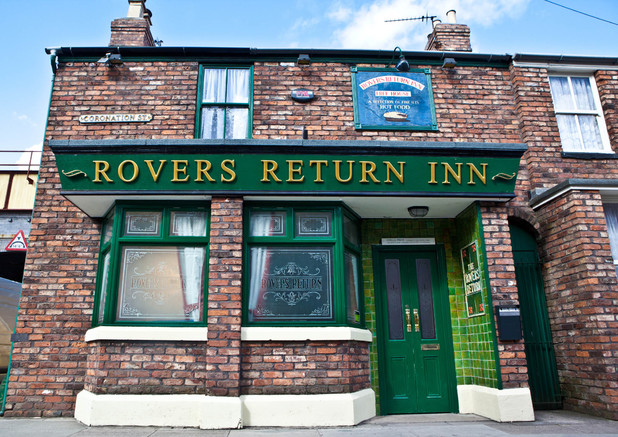
Jon Woods describes his dream job – directing Coronation Street
As a Salfordian, working on Coronation Street, shooting the film inserts, either on the street itself, on the lot, or round and about in Manchester as location work, was great for me. It was like the fulfilment of a boyhood dream. A programme pretty much based in my home town, and being a Salfordian myself,…
Read More
Steve Leahy on the creation of The Krypton Factor
Which other shows did you create? Well, the first one I was ever involved in creating was Krypton Factor, which was Jeremy Fox’s idea. This was while we were on regional programmes, but Mastermind had started, and ITV wanted to counteract that. It was deemed that the right calibre show would play as adult education…
Read More
Brian Blake recalls how he joined Granada TV
Well I joined in 1966 and it’s a slightly strange story how I joined. Basically I was an academic, which sounds a bit pompous. I’d done two degrees in History and I was working on a big project in London on the history of parliament. I’d done three years of that and was beginning to…
Read More
David Liddiment talks about moving into management
For someone of your background as a promotions scriptwriter and a researcher and director and producer, you had done a lot of making, but you ended up a suit. Yes. How did you feel about that? I loved it. I loved it. I have been very fortunate to have the opportunity to have my eyes…
Read More
Michael Ryan describes one of his most memorable WIA’s
From a personal point of view, the stand-out success of the seventies was the film I made in Longnor in Derbyshire in 1971, where I persuaded the village to give up smoking for a week. This was at a time, of course, when 75% of the male population was still smoking. It was timed to…
Read More
Frank Clarke describes how he joined Granada
Well, what happened in those days, with National Service, an employer was only obliged to take you back for 12 months after you finished your service. This was 1952. 1954 – came out in 1955. We were going to get married. I admit we was offered a regular soldier with a guaranteed promotion but I…
Read More
Gordon Burns describes how he joined Granada
Before Granada, I was at Ulster Television in Belfast because I come from Northern Ireland, I’m Belfast-born, half Belfast-bred – I moved to England when I was five, and back when I was 13, to Northern Ireland, hence the lack of Northern Ireland accent! But I had worked on local newspapers, then I’d gone on…
Read More
Barry Bowmer describes his role in Film Ops in Manchester
And you moved up to Manchester to become…? I went into Film Ops. Film Operations, which was under Bill Lloyd and did various parts of jobs there initially. Some film library, again messages to the labs. Humphries Laboratories which used to process film which was quarter of a mile away, used to go backwards and…
Read More
David Highet on the special atmosphere at Granada’s Liverpool base
I felt I had no especial need to foster a family feeling because the good people we had there were already doing it themselves. The way in which people got on with each other was a great pleasure to see. It may have been something to do, unwittingly, with our recruitment process because as…
Read More
Jon Woods on the importance of unions at Granada
Working at Granada is the only time I have ever been on strike, which was the ACTT strike not long after I joined, I think it was 1978 or 1979. I think we were on strike for 11 weeks, and that to me was a bit of a shocker, because it’s the only time in…
Read More
Steve Leahy remembers his shared role with David Liddiment
At the time David Plowright had two of everything. So Liddiment and myself were heads of entertainment, which we carved down the middle and he did the Street which counted under that at time, and he did all comedy, which I had no interest in whatsoever, and correctly, he should do that. And he did…
Read More
David Liddiment’s memories of the soap Albion Market
I loved directing. When I was in it, in the middle of it, I couldn’t envisage doing anything else – but bit by bit I started to get a bit frustrated, because you are… you are inevitably directing other people’s visions, things they want to do rather than things you want to do, and I…
Read More
Michael Ryan describes filming the funeral of Steve Biko in South Africa
Another one that worked brilliantly was the funeral of Steve Biko. I’d done with David Hart a sort of undercover film in South Africa at the time just after the student riots in Soweto. So I had all the contacts and when Biko was obviously murdered in prison, I knew exactly who I would go…
Read More
Barry Bowmer on the role of the film editor
OK, so you become a film editor, tell us something about the role of the film editor. What does a film editor do? Well a film editor, director, producer, cameras etc. go out and shoot whether it’s a drama or documentary and then it comes back into the film editor who in agreement with the…
Read More
David Highet recalls how the programme ‘Exchange Flags’ came about
We were doing news inputs. Granada Reports was edited by Rod Caird in Manchester and anchored by, I think, Bob Smithies, and Tony (Anthony) H. Wilson and Greavsey, Bob Greaves and various other very experienced folk. Roger Blyth who worked as a journalist, a freelance journalist on Merseyside for many years, fell naturally into the…
Read More