


May 2016 marks 60 years since Granada Television began transmitting to ‘the north’. It was to become the only commercial television company to never lose its franchise and was described by the New York Times as ‘the finest television company in the world’. The company was founded by Sidney Bernstein and became famed for its innovation, radicalism and quality…
Read More
Sandy Ross biography
Sandy Ross joined Granada Television in 1976 after working as a solicitor in Edinburgh. He worked initially as a Researcher on regional programmes and in particular Granada Reports before working with Tony Wilson on What’s On. He later became a Producer producing local and networked programmes such as the Mersey Pirate which presented more than…
Read More
Brian Blake biography
Brian Blake joined Granada TV in 1966 after a short career in academia. He was initially employed to work on a project where World In Action material that had not been transmitted would be published in booklet or pamphlet form. After nine months however the project was declared unviable and Brian was told to go…
Read More
Gordon Burns biography
Gordon Burns was one of the best-known presenters on Granada Television during the 1970s and 1980s, presenting programmes such as The Krypton Factor, Granada Reports, Reports Politics and the annual party conferences. Gordon came to Granada from Ulster Television where he had covered the troubles over a number of years. During his time at Granada…
Read More
Brian Blake recalls how he joined Granada TV
Well I joined in 1966 and it’s a slightly strange story how I joined. Basically I was an academic, which sounds a bit pompous. I’d done two degrees in History and I was working on a big project in London on the history of parliament. I’d done three years of that and was beginning to…
Read More
Frank Clarke describes how he joined Granada
Well, what happened in those days, with National Service, an employer was only obliged to take you back for 12 months after you finished your service. This was 1952. 1954 – came out in 1955. We were going to get married. I admit we was offered a regular soldier with a guaranteed promotion but I…
Read More
Gordon Burns describes how he joined Granada
Before Granada, I was at Ulster Television in Belfast because I come from Northern Ireland, I’m Belfast-born, half Belfast-bred – I moved to England when I was five, and back when I was 13, to Northern Ireland, hence the lack of Northern Ireland accent! But I had worked on local newspapers, then I’d gone on…
Read More
Joan Riley biography
Joan Riley joined Granada Television in 1960 as part-time copy typist working on the local evening news programme. She was the first person in the UK to hear of President Kennedy’s assassination when she picked up a call from the Press Association. After working in local programmes she joined the Promotions Department and then went…
Read More
David Boulton on how he was first employed by Granada as a Press Officer
I was working for Tribune and running a campaign for Nuclear Disarmaments Paper, Sanity, and I started writing a series of articles on Conscientious Objectors in the First World War – this was at the time of the fiftieth anniversary of the beginning of the war – and the articles were picked up by the…
Read More
Roland Coburn describes how he started work at Granada TV
I left school when I was eighteen, and then I went to work for a company called Greendow, which was a small independent place that used to have freelance editors, assistants and things to help out all the television companies around the country. They used to supply editors to work on programmes like World in…
Read More
Maggie Coombes recalls how she came to be employed by Granada TV
I’d done a postgraduate course at Bristol University in film and television, and I just wrote round to all the television companies I could think of, this is who I am, I’ve done this postgraduate course, I’ve been at art college for four years before that, I’ve done a three-dimensional design course, I’d like to…
Read More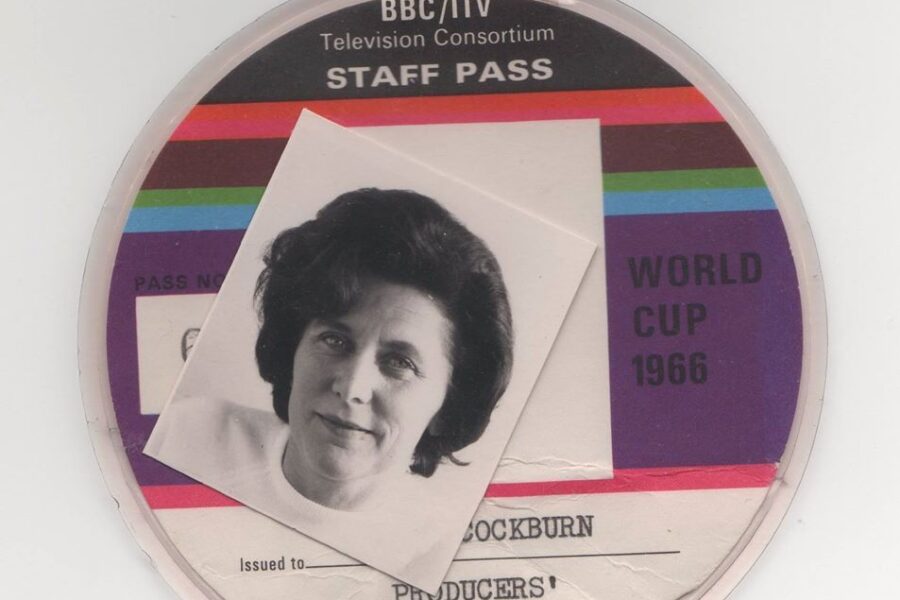
Roland Coburn describes how his parents’ careers at Granada influenced him
And your mum and dad had worked in Granada as well? Mother was, in fact, David Plowright’s secretary, in the very early days, and also helped Sir Denis Forman out as well. Then she became a PA. Father was a researcher on Scene at Six Thirty — or People and Places, as it started —…
Read More
David Boulton’s memories of ‘Scene at 6.30’
I was a very poor press officer because I wasn’t any good at publicising things and being a PR man and after a fairly short while (I think about a year) Sidney summoned me and said, ‘How are you getting on?’ and I said “I hope I’m doing alright.” And he said, ‘Well, I think…
Read More
David Boulton describes how ‘World In Action’ operated in the 1970’s and the team that supported the journalists
At any one time there was somewhere between 12 and 15 (maybe even a few more) producers, directors and researchers on World in Action and, of course, we had very regular meetings to discuss programme ideas and there was a quite fierce competition among the producers and researchers to put forward ideas that they would…
Read More
David Boulton describes his experiences of making films in Northern Ireland for ‘World In Action
The two strands that I tended to make my own were films in Northern Ireland (that was the first one) because the so-called ‘Irish Troubles’ or the ‘English Troubles’ as far as the Irish were concerned were all bubbling up at this time from 1969 onwards and I had a peculiar ‘in’ into Northern Ireland…
Read More
David Boulton on the renowned Steel Papers ‘World in Action’ programme
What happened was that there was a strike at British Steel. British Steel was still a nationalised company and there were rumours that the management end of the dispute was being dictated by the Thatcher Government and these rumours were very strongly denied by the management of British Steel, Charles Villiers, the Chairman of British…
Read More
David Boulton reflects on the challenges of managing the ‘World In Action’ team
You’ve talked a little bit about the eclectic bunch of people who worked on World in Action. What was it like being editor of that programme and having to deal with these very clever but also people who could be very awkward, shall we say, to work with? Yes, you’ve put it very well. They…
Read More
David Boulton on how he valued the support of his cameramen and film editors on ‘World In Action’
When I joined World in Action (in 1969) the two newly appointed editors of World in Action, joint editors, were John Birt and Gus MacDonald. John Birt was, I think, only about 23 when he was appointed editor of World in Action and Gus was a little older but had already begun to make his…
Read More
David Boulton on the challenges of making films under-cover
Another strand of films that I got involved in but I think this was really something that Gus MacDonald initiated was we needed to meet the criticism that it was very easy for us to go out to the United States, say, a very, very free country and make films very, very critical of the…
Read More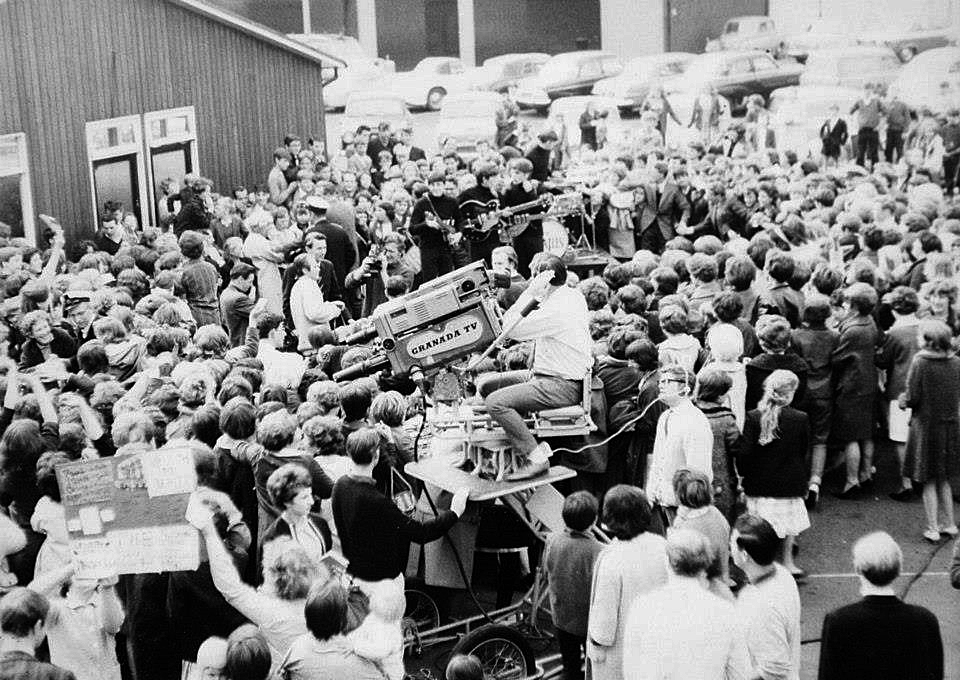
Janice Finch remembers as a nine year old trying to meet the Beatles at Granada
I forgot to mention that I had of course actually breached the walls of Granada television in 1963 as a nine year old when the Beatles were supposed to be appearing live on their Friday night show. It was a summer holiday so it must have been August 1963 and I’d gone with a girl…
Read More
David Boulton’s impressions of Granada as a company
First of all it was a family company. The Bernsteins were the bosses. The Bernsteins made the decisions. Sidney was the one with the social conscience who determined that Granada would be better than the BBC [British Broadcasting Company] at producing its news programmes, its current affairs programmes, and in developing a social justice direction.…
Read More
David Boulton on ‘What the Papers Say’ and encountering Nigel Lawson
Of course, producing What the Papers Say was great fun as well. It’s amazingly still going. It amazingly still has the title music that I chose for it! That was a very simple job. I mean it just involved having a team of regular presenters across the political spectrum. I remember one of the presenters…
Read More
David Boulton on the introduction of Electronic News Gathering
Another thing that you did when you were head of current affairs was the introduction of the new technology in Liverpool, ENG [Electronic News Gathering], and the new technology high-tech newsroom. Yes, that was a nightmare because if there was anybody in Granada who knew less about computers than I did, I’d have been interested…
Read More
David Boulton on how he contributed to the rise to power of Margaret Thatcher
It was Linda MacDougall, the wife of a Labour MP, who was the producer on World in Action who came to me and said, ‘Look, Margaret Thatcher is challenging Ted Heath for the leadership of the Conservative Party.’ We all thought this was a great joke that this woman, who had not made a…
Read More
David Boulton describes what he thinks is his personal legacy through his programmes
You were talking about how you aimed to be impartial and I was interested that you were somebody, I think, who came to television with strong political and ethical principles and I wonder if there are examples that you felt that through your programme making you had perhaps changed or influenced peoples’ perceptions of issues…
Read More
David Boulton describes the ethos of Granada
Granada was built on the fact that there was a very, very close editorial connection between the people at the top and the people at the bottom. I mean the people in the middle, the producers worked directly to Dennis Forman, Sidney Bernstein and you made your decisions in accordance with what you felt they…
Read More
Geoff Moore on how he joined Granada TV
I joined Granada in January 1969. I’d just graduated from Liverpool University, did a second degree in politics there. I came out after four years at university (Birmingham and Liverpool) vaguely wanting to be a journalist. I mean I’d done a lot of politics and I liked writing. I’d come from a left-wing family. We’d…
Read More
Geoff Moore describes the range of musicians he worked with on So It Goes
My second show as a producer was So It Goes. So from World in Action I went to So It Goes. That’s a big leap! Yes. It was, wasn’t it? Six months on So It Goes. My music background helped me get this maybe. So It Goes became a cult hit – still is –…
Read More
Geoff Moore remembers working in comedy with Kenny Everett
So I found myself going into comedy as the first job, which is not at all my background or my bent. Mind you, I was young and this was great! You know, who cares what it is! You are working in television and you go out filming with Kenny Everett, you travel and they get…
Read More
Geoff Moore recalls his first stint on World In Action
By July or August 1969 I was in World in Action with John Birt. In the summer of 1970 I left Granada to become a rock and roll star! But my first period on World in Action was late summer ’69 to the middle of 1970 in which time I researched three World in Action’s.…
Read More