


I remember in the winter of ’73/’74 I got fed up with music (there was nothing in it for me) and then I knocked on the doors of Gus MacDonald, for World in Action again, and John Birt at London Weekend. They both offered me contracts! I took the Granada one. So then we have…
Read More
Geoff Moore remembers the diversity of Granada’s output in the 70’s
At that time we’re talking about late ‘70‘s, what a great place to work Granada was. There was little competition. And Granada made lots of regional programmes. There was a big commitment to regional programmes , that’s now gone from ITV. There was a farming programme, Down to Earth. There was Regional Sports. There was…
Read More
Geoff Moore describes the particular ethos of Granada
It suited us, us left-leaning provincial grammar school boys. I mean it wasn’t a posh place, it wasn’t a place for public school boys. It wasn’t a culture-vulture place or snobbish. It was quite the opposite of that. It was a Northern ‘muck-in let’s do it’ kind of thing, which for example you found in…
Read More
Geoff Moore reflects on whether Granada could be considered ‘left-wing’
It was undoubtedly a left-wing company in the ’60s and ’70s especially when feelings were running very high between left and right in this country and it was a given at Granada that you were left-wing. It was un-stated but there. You were kind of anti-Establishment and that phrase sort of sums up Granada’s ethos…
Read More
Geoff Moore recalls producing The Krypton Factor
Then I got the call from Steve Leahy to do Krypton Factor, which involved me for 2 years, ’86 and ’87. That won an award, which I’m proud of, the Spanish TV Festival Best Entertainment Programme 1987. I did transform Krypton. They’d become fed up with Krypton. It started in ’77. They were just bored…
Read More
John Huntley talks about how he joined Granada TV and his first meeting with Gus MacDonald
I was at York University from ’69 to ’72. Also at York University was Jeremy Fox, who I met, and we used to do TV programmes. It was a collegiate university, so they had a TV station, primarily for science lectures so they could beam them around the various colleges. But in the off time,…
Read More
John Huntley on working in the Sports Department
I moved on to Kick Off, the football programme, and I was definitely doing that when Red Rum won the Grand National, because Steve Hawes and I had to log the football match – every throw in, every goal kick – you had to log the time so that you could edit a 90-minute programme…
Read More
John Huntley on the privilege of working for Granada
Television was a career in those days that a lot of people aspired to. I’m not so sure it is now, but people really wanted to get in, and a lot of people were given an opportunity. As I say, you could move wherever you wanted. There was one stage where I nearly became a…
Read More
John Huntley on how he brought Richard and Judy together!
Of course, my biggest claim to fame is I am the person responsible for Richard Madeley and Judy Finnigan getting together. Explain! I applied for a producer’s board, didn’t get it, then there was another one, and this would be in January/February 1982. I was presenting Granada Reports with Judy Finnigan – she and I…
Read More
John Huntley on Granadaland as a region
I think given how much Liverpool and Manchester hate each other… when I was in the Navy, sailors used to hate the navy, but as soon as they were outside the ship, if anybody said a word about the Navy they were ready to have a fight! I think it did define the region, it…
Read More
John Huntley describes what Granada was like to work for as a company
Looking back it was a fantastic company to work for, and I really do think it was. And the people who have gone on to do extraordinary things, I mean, extraordinary things, many of whom started work there. I mean, yes, without a doubt. I’m not too sure towards the end, I think it wasn’t…
Read More
John Huntley on the strong bonds that existed between Granada staff
I thought that was the most extraordinary thing about Granada, one of the most extraordinary things, but you just get to chatting to people like Leslie Woodhead, people like Ray Fitzwalter, not that he was in the bar that often, but you just got to know everybody. One of the reasons, I think, is…
Read More
John Huntley’s memories of the Granada canteen – and Irma!
I remember the canteen, my God. The canteen had Barnum and Bailey photographs or posters, because that was put there by the Bernsteins, to remind everybody that we’re in show business, that’s what we were. And also – which I thought was extraordinary at the time, and I think was pretty rare – was that…
Read More
John Huntley’s memories of Tony Wilson
Tony, of course, he was presenting and reporting, Tony Wilson. Who was presenting? Bob (Greaves) and Tony were the sort of… incredible, weird relationship they had. Bob used to get fed up because Tony would always call him his dad and take the mickey out of him for being older. I think there was an…
Read More
John Huntley remembers the two ‘Bob’s’ on Granada Reports
Bob Greaves? He was great bloke, Bob. He was absolutely fantastic. One of the reasons I really liked Bob was that he never appeared to show any kind of resentment to the fact that I was becoming a co-presenter with him. I think being… Bob Greaves, Stuart Hall obviously for the BBC, but Bob Greaves…
Read More
John Huntley recalls his early days as a researcher in Granada Reports
So you started as a researcher in 1976? Yes. They weren’t expecting me; Jeremy Fox said, “Oh, God, oh, yes… I suppose we’d better find somewhere for you to sit.” And what happened in those days was – and Jeremy Fox organised this quite cannily to give himself less work to do, frankly – on…
Read More
John Huntley describes making films for Granada Reports
I went to Granada Reports as a reporter, which is where I wanted to go, and that’s what I did for another year or something perhaps, and then I move into presenting. Slowly. Yes. So that’s what I did. I loved being a reporter, it was very good. I often say to people today, we’re…
Read More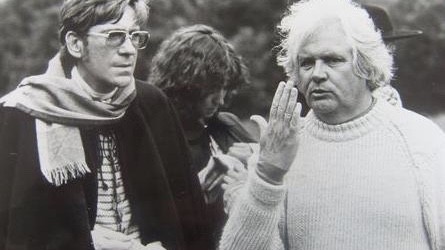
Maggie Coombes remembers working with the director Ken Russell
So you became a production designer … That’s the top of the pile, if you like, and that was a tremendous privilege really, because you get to work with so many creative people, I mean, writers and directors. I mean, Anthony Minghella, Charles Sturridge, John Madden, Ken Russell… I mean, I worked with those people,…
Read More
Maggie Coombes on the social side of working on a drama
To start with, probably because I was the only woman in a very male environment, I don’t think the social bit was as important – I was sort of take up with the job to start with – and I think too, as I say, I worked with mainly men, and I think it was…
Read More
Maggie Coombes talks about filming on location as a designer
TThe Sherlock Holmes thing with Jeremy Brett, which, I think, was through four series (Jeremy did four different Sherlock Holmes productions, each ran for between one and three series) and then they did some one-offs after that. I really enjoyed that. I mean, one of the great things if you were doing drama, and particularly…
Read More
Maggie Coombes describes the design process on a drama programme
I think the first thing I worked on was Sam,which was a long-running drama series that John Finch wrote, and I was working for somebody called Colin Pocock. I think the first thing he asked me to do was to design a wall for somebody’s back garden – they needed something for an actor to…
Read More
Maggie Coombes on Granada as a regional company
I’m from the south myself, but I’ve lived most of my adult life in Manchester, and I think what was so refreshing about Granada was that it wasn’t a London satellite. It really wasn’t. And when I first went there, and sort of into the ‘80s, people were actively… they were expected to live in…
Read More
Maggie Coombes on the challenges of working in a male-dominated environment
The designers and the other assistants I think were pretty welcoming, but I think there were issues with some of the tradespeople that I worked with in the construction shop – again, mainly it was fine, but I remember them telling me, I think in my first week, somebody down there said to me, “Oh,…
Read More
Maggie Coombes talks about Granada as an employer
I think they were terrific, absolutely terrific. It was small enough and eccentric enough to feel almost like a family. I mean, it sounds like a cliché, but it was – and although I didn’t really have anything to do with the very senior people like the Bernsteins or Denis Forman or others, I mean,…
Read More
Maggie Coombes reflects on the changes within Granada as a company
Yes, I think in the sort of mid to late 80s, things started to change, definitely. I mean, for some years before I left, and I left for personal reasons, because we had a child and I wanted to spend more time… but it had really started to change by then. It was quite obvious…
Read More
Maggie Coombes on how reduced budgets have impacted on design
First of all you’d get a script, and you’d break it down, so you’d read it, you’d work out how many different locations or sets there might be, and you’d have to think about if it was a period or contemporary and how you’d dress it and work out budgets… obviously talk to the directors…
Read More
Bruce Anderson describes his experiences as a gay man working for Granada
I think the reality was that there were some people who were obviously out, but on balance, at that stage, it was not something that you necessarily talked about. Being gay was relatively in the closet, I think. You obviously knew the other gay people because you could possibly have met them socially in bars…
Read More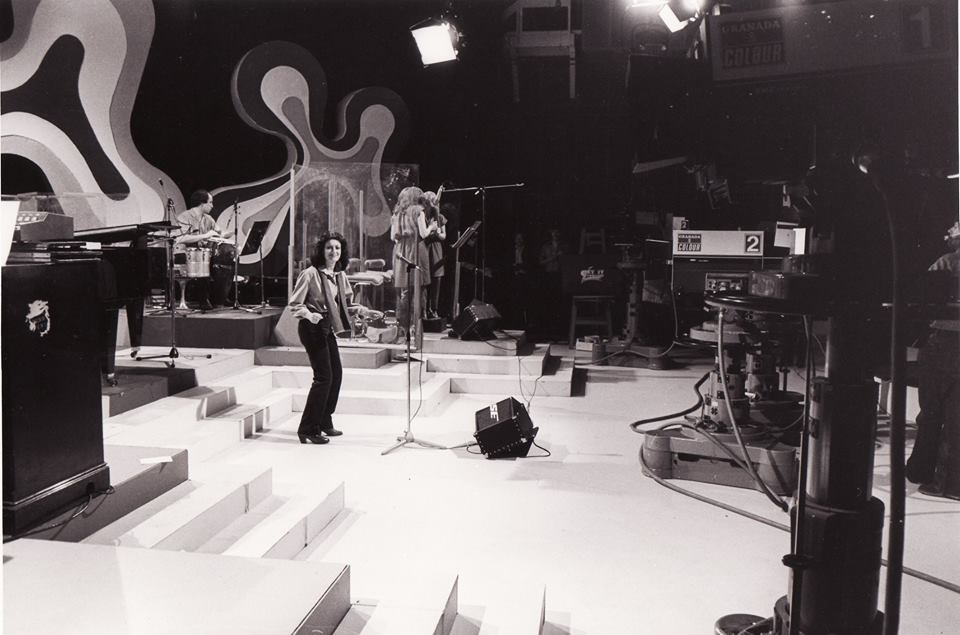
Bruce Anderson describes how he came to join Granada TV
From the age of 17 to the age of 21, I spent four years at Bournemouth and Poole College of Art, which is now part of Bournemouth University. I primarily went there I suppose, because I wanted to be a photographer, or I thought I wanted to be a photographer. While I was there, I…
Read More
Bruce Anderson explains the 10 hour break agreement and gives a specific example of its impact
The agreement was you would normally have a 12-hour break between two turns of duty. If you had a modest amount of notice, that could be cut to a10-hour break between two turns of duty. If you didn’t get a 10-hour break, when you started work again on the next turn of duty, at…
Read More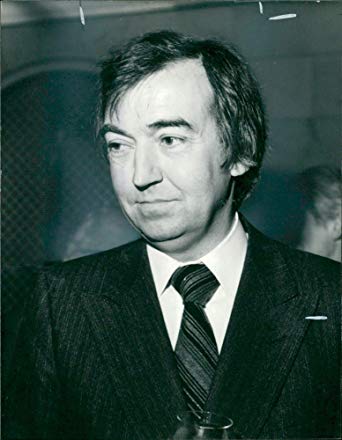
Bruce Anderson on his role as a member of the Granada Forum
So I was elected a councillor about 1971, and continued until 1976, and in 1976, I wasn’t re-elected, the ward… there was a change in general politics, and I was not re-elected, only by a handful of votes, which was very irritating! So I came back to work full-time, you might say, and almost immediately,…
Read More