


I was sent to the Lakes with Ken Russell, who was then a features director. So having a features director work on a television programme was interesting, to say the least! David Warner was in it, and Felicity Kendal — people like that. We were up there, and we actually edited the programme in Ken…
Read More
Roland Coburn on working in local programmes
What kind of programmes did you work on after doing those initial dramas? Well, it was a bizarre setup really, because when I was an assistant, ITN used to have a north-west reporter, who used to come up to Manchester and do little north-west news items. The very first thing I cut was a fifteen-second…
Read More
Roland Coburn on how Granada changed in the late 80’s and early 90’s
So the company begins to change, in the late eighties and into the early nineties? Yes. It almost seemed to come at the same time as Maxwell took over the Mirror, because he moved into the Mirror, which was in Manchester — because I knew people that worked at the Mirror — and all of…
Read More
Roland Coburn on Granada as a company and employer
It was a brilliant company to work for. Everybody seemed to want to do their best for the company. Everyone said, ‘I work for Granada Television, because they make the best programmes’, and they did. Jewel in the Crown, Brideshead Revisited: these wonderful dramas that they would make, and they would spend a lot of…
Read MoreRoland Coburn explains the ten-hour break!
You were well rewarded? Well, you were well rewarded in the sense that you got overtime, and overtime was often an incentive for a lot of people to go beyond what was normal. On World in Action — and it went through across the board — if you did work overtime, you’d have to have…
Read More
Ann Lewis on Granada as an employer
So what did you think Granada were like as a company towards its employees? How do you think it treated its employees? Well it could be very easily over-simplified and said they were very paternalistic and very ‘blah, blah’ but I don’t think that was the case in everybody’s experience. I think there was a…
Read More
Ann Lewis recalls her first impressions on joining Granada
So what was your impression of coming to work for Granada, not having worked in television before? It was very exciting, it was very exciting the prospect of working in the media. In fact, what I did was I sent applications off to all kinds of places where I thought if I’m going to be…
Read More
Ann Lewis recalls about the challenges she faced when she tried to change her role
So you were a secretary but you obviously had ambitions to be more than that. I wondered if you even applied for other jobs? I did, I did. In my efforts to get out of the secretarial role, I applied, there was a job came up as a studio camera operator. I think at that…
Read More
Ann Lewis describes one of the disputes she was involved in as a shop steward.
So as union rep what kind of issues would you have to deal with? Oh there were some really interesting ones. In fact, Granada, I don’t know about other companies, but Granada I think it was in about 1975 were looking at getting an in-house crèche and I thought that was really good and we…
Read MoreClarissa Hyman
Clarissa Hyman worked for Granada for many years as a researcher and producer and was one of the original launch producers for ITV’s This Morning programme. Now an award winning food and travel writer, she is the Vice-President of the UK Guild of Food Writers. It was my first job. It must have been the…
Read More
Wallen Matthie describes how he joined Granada
Let’s do this chronologically when did you join Granada? I joined Granada in 1981. I was approached initially, I used to work for the BBC on a freelance basis, I did a bit of radio for them. And then the riots took place in the summer of 1981, which I covered for the BBC. As…
Read More
Brian Trueman describes how he started work at Granada
I started at Granada in 1957 when I would be 25. I’d been, I won’t go into the tormented history of how I got there, but by a series of accidents I started acting in radio just before my fifteenth birthday. I’d acted through school life, and acted through university life and even on a…
Read More
Brian Trueman recalls his early days as a newsreader
Very peculiar it was, wearing my makeup which was bright orange in order that I’d look normal with a vivid emerald green shirt which would look white because we were on, what did you call those cameras which were very slow? Very early black and white, very primitive camera. I read the news quite successfully…
Read More
Brian Trueman talks about the importance of Granada TV to the region
How important do you think Granada was to the region? Hugely. Hugely. I mean it brought …. The BBC was already there, but the BBC somehow kept itself to itself and was obviously an adjunct of the metropolitan BBC, of BBC, the Corporation. I don’t think it interacted in quite the same way with the…
Read More
Brian Trueman’s memories of Sidney Bernstein
Sidney was notorious for living on the premises! You know when they built the new block he had the Penthouse on the roof and begins … Sidney was known as “Fiddler on the Roof”! So he would patrol the building – in the evening – but he would patrol the building during the day with…
Read More
Brian Trueman remembers meeting the Beatles and the Rolling Stones
The local programme, Granada Reports in the early days, was in a very small studio, Studio 4, which is now a store. Well last time I was in, it was a store room, electric cables, etc. We packed a lot into it. We would have the magazine programme and they would nightly, most nights I…
Read More
Brian Trueman compares working at Granada with working for the BBC
People said what’s it like working for the BBC after working for Granada. I said working for Granada literally was like walking on broken glass; working for the BBC is like being smothered in cotton wool. It’s awful. Arm around the shoulders. “Wonderful to have you with us, Brian” all the rest of the stuff,…
Read More
Ian Hunton on how he was first employed by Granada
It was serendipity: I was reading a magazine called Wireless World – which doesn’t exist anymore – and I just happened to open it at the adverts at the back, and there it said, ‘Granada Television is looking for trainee audio engineers’. I’d always been interested in high fidelity; in fact, I’d written my dissertation…
Read More
Wallen Matthie describes some of the range of regional programmes he worked on.
Can you remember any of the other programmes you worked on? Yes, I worked on – as a researcher you moved in and out of programmes – in terms of regionals at the time Granada Reports was quite a big production. At one stage we had offices in Liverpool, and Granada Reports was being presented…
Read More
Wallen Matthie describes working on the programme, This Is Your Right
This Is Your Right was a social action programme presented by the infamous Lord Winstanley. It was transmitted each weekday for five minutes and then on a Sunday they had a half hour programme. It was a consumer orientated programme and we had a whole range of advisers who were supporting the programme whether it… Read More

Ian Hunton describes the training he received as a video engineer at Granada
On the seventh floor, they had a training officer and an office that was divided into booths. They had these training machines then, which were microfilm. The training officer had written programmes about the technical aspects like lighting and lenses, and general theory about TV – colour didn’t exist then – and you were expected…
Read More
Wallen Matthie talks about some of the people he worked with at Granada
Any other people in particular you remember? Yes, the people who stood out for me, people I worked with very closely – Mike Short who was a producer for Granada Reports. Before Mike Short, there was Rachel Hebditch – a phenomenal woman working in a man’s world. And Chris Radzinski stood out; again these are…
Read More
Ian Hunton recalls his special memories of working as a studio engineer
I have various memories. I remember being in studio twelve – the big studio – lining the cameras up. We were in colour then. It was for some Christmas spectacular, I think. They did those in August. I was there with the cameras and I turned around and they had a jazz orchestra on the…
Read More
Ian Hunton talks about working on ‘World in Action’
World in Action was a regular visitor, once a week. They would come in on Sunday morning. Once it had left film? Once it had left film. It would be on various tapes. They had their own offline editors. We’d get a box of tapes and a little edit decision list for the computer. The…
Read More
Wallen Matthie describes his memories of Tony Wilson
You mentioned Tony Wilson, what kind of person was Tony? I found Tony to be a fabulous guy, I got on really well with Tony. When I first met Tony, these were people I used to see on TV, it was really strange, I’m a local lad in terms of schooling and the rest of…
Read More
Ian Hunton talks about working on football programmes
The other things we did were things like the football – mainly, I think, because they knew I wasn’t particularly interested. They always seemed to choose me to do the football, because I never got involved in, ‘Who’s shooting what?’ and ‘Isn’t that a good goal? There was a football programme on Sunday night with…
Read More
Wallen Matthie recalls working on a documentary about gangs in Manchester
And also at the time you worked on a documentary about guns and drugs in Manchester. Did you feel that there was any antipathy from the black community? Yes, there certainly was. What I did was to do my research. And when you do your research accurately and properly you’ll generally find that all the…
Read More
Wallen Matthie on being one of the few black people working at Granada TV and his input into the company’s policy on BME recruitment
You were born in Jamaica but grew up in Manchester, how did it feel coming to Granada as a black person – where there many black people on the staff? No, when I joined Granada I just knew of two people on staff. Actually just one on staff because I was going to mention Oral…
Read More
Wallen Matthie talks about the views of the black communities in Manchester and Liverpool towards Granada TV
A lot of people have talked about Granada being really important to the North West, Manchester. What was the view of the black community towards Granada, did it view it with any affection? It’s quite interesting. I felt that the black community in Manchester felt that Granada was one of those companies that they were…
Read More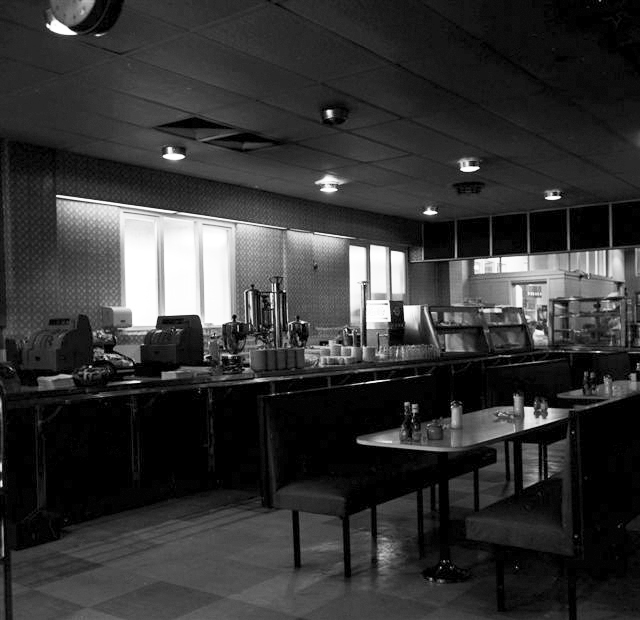
Ian Hunton recalls the Granada canteen
The canteen was the hub. We used to have a tea break every morning and afternoon, and of course you’d go in for lunch, and if you were working late into the night you’d go in for your dinner as well. But it was the place where everybody went. All the turns went in there.…
Read More