


I have various memories. I remember being in studio twelve – the big studio – lining the cameras up. We were in colour then. It was for some Christmas spectacular, I think. They did those in August. I was there with the cameras and I turned around and they had a jazz orchestra on the…
Read More
Ian Hunton talks about working on ‘World in Action’
World in Action was a regular visitor, once a week. They would come in on Sunday morning. Once it had left film? Once it had left film. It would be on various tapes. They had their own offline editors. We’d get a box of tapes and a little edit decision list for the computer. The…
Read More
Wallen Matthie describes his memories of Tony Wilson
You mentioned Tony Wilson, what kind of person was Tony? I found Tony to be a fabulous guy, I got on really well with Tony. When I first met Tony, these were people I used to see on TV, it was really strange, I’m a local lad in terms of schooling and the rest of…
Read More
Ian Hunton talks about working on football programmes
The other things we did were things like the football – mainly, I think, because they knew I wasn’t particularly interested. They always seemed to choose me to do the football, because I never got involved in, ‘Who’s shooting what?’ and ‘Isn’t that a good goal? There was a football programme on Sunday night with…
Read More
Wallen Matthie recalls working on a documentary about gangs in Manchester
And also at the time you worked on a documentary about guns and drugs in Manchester. Did you feel that there was any antipathy from the black community? Yes, there certainly was. What I did was to do my research. And when you do your research accurately and properly you’ll generally find that all the…
Read More
Wallen Matthie on being one of the few black people working at Granada TV and his input into the company’s policy on BME recruitment
You were born in Jamaica but grew up in Manchester, how did it feel coming to Granada as a black person – where there many black people on the staff? No, when I joined Granada I just knew of two people on staff. Actually just one on staff because I was going to mention Oral…
Read More
Wallen Matthie talks about the views of the black communities in Manchester and Liverpool towards Granada TV
A lot of people have talked about Granada being really important to the North West, Manchester. What was the view of the black community towards Granada, did it view it with any affection? It’s quite interesting. I felt that the black community in Manchester felt that Granada was one of those companies that they were…
Read More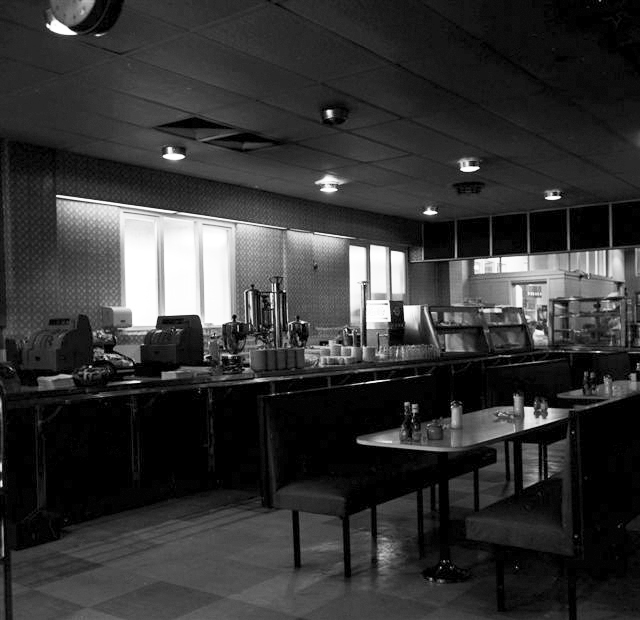
Ian Hunton recalls the Granada canteen
The canteen was the hub. We used to have a tea break every morning and afternoon, and of course you’d go in for lunch, and if you were working late into the night you’d go in for your dinner as well. But it was the place where everybody went. All the turns went in there.…
Read More
Wallen Matthie talks about whether there was bullying at Granada
Was there a certain amount of bullying do you think? Oh gosh yes, absolutely there was a certain amount of bullying went on. I mentioned the newsroom earlier on and certainly when I first joined in terms of the producer and the news editor were all females. It was quite interesting that because they were…
Read More
Ian Hunton describes his work as an online editor
I never did film editing. All the editing then was called ‘online editing’. It was traditional. Because the online editing suite was so complicated – with videotape machines and the mixers – it was generally accepted that the people who got those jobs were ex-engineers. I decided after I’d had eighteen years doing the engineering…
Read More
Wallen Matthie describes the support that Granada offered its employees
At my interview one of the things that was said to me was that you were entering into this family. And it was a family. I did feel that. People were really supportive. You could go to most of the senior people, producers. The fact that it wasn’t Mr Plowright, it was David, and he…
Read More
Joan Riley on how she came to be employed at Granada
There was an advert in the Evening News for a fast typist for the Granada Newsroom. I applied and was asked to go for an interview; a typing test. This was 1960. At that time the main building hadn’t been finished, so all the offices were opposite Granada in Quay Street in an old warehouse.…
Read More
Joan Riley remembers working in the Promotions Department – and meeting Pat Phoenix
Promotions department; the duty announcer would give a run down of all the programmes for that night and would pick out the special ones, do a few more words on that. And the scriptwriters would write these small scripts out, minute long for the afternoon and evening, and we typed them out. We’d get black…
Read More
Joan Riley remembers the variety of performers on ‘Scene at 6.30’
A lot of the performers would come down chatting to us in-between, because we were permanent staff there. One day a little red headed girl, very small, about sixteen, Scottish. She came and was chatting away with us and they decided she would rehearse her song at our end. I was very grateful I had…
Read More
Joan Riley remembers the famous incident when Bob Greaves met an elephant
We had a photo call for the zoologist, Desmond Morris, who did a lot of programmes for Granada. There was a photo call for him in Chester zoo, and it was a good turn out, all the journalists, reporters and photographers were there. Each one of them trying to get an exclusive; an exclusive photograph,…
Read More
Joan Riley recalls how Granada covered the assassination of President Kennedy in 1963
They decided they were going to have a new magazine called ‘Scene at 6.30’. So the whole of the newsroom was transported to the fifth floor; it was a large studio there. From the lifts you turned right and it was the whole of the floor, a very large area for the directors and researchers…
Read More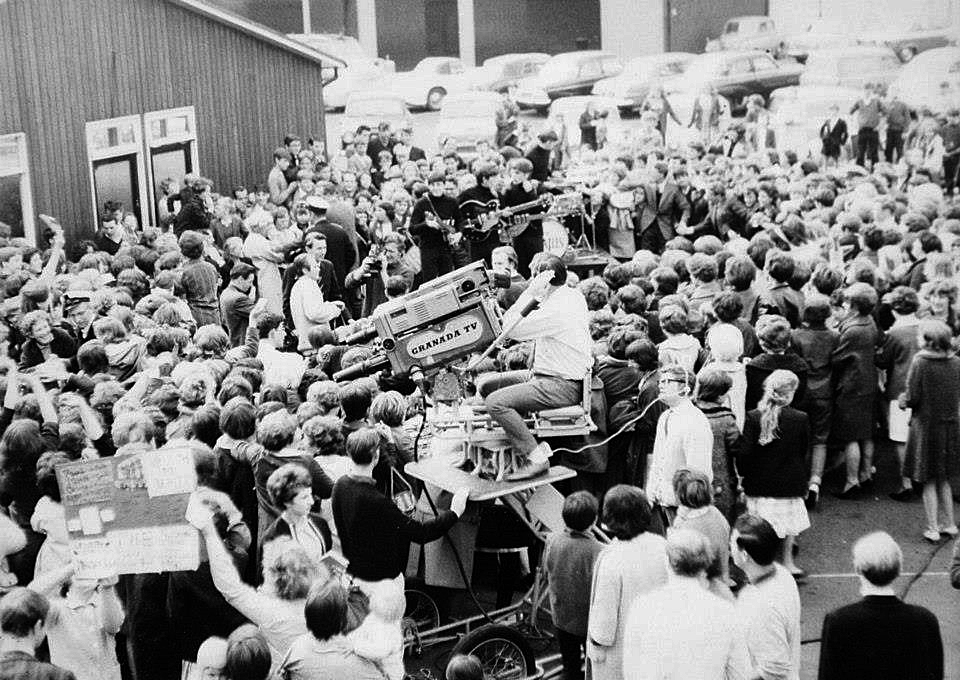
Joan Riley meets the Beatles
They were going to have a late news bulletin so Joyce and I did split shifts. One week we’d have two days 10-6 and three days 6-11 and then swap round. Promptly at 8 o’clock every night we’d get the empty flask and go to the canteen for refills to keep us going. One night…
Read More
Joan Riley remembers a union dispute about appearance fees
It was decided to have ‘Scene’ at 11 o’clock as well. So we all went back to Quay Street side, directly above where the original newsroom had been, a very large area. At the far end was the studio. I don’t know whether you remember it but the studio was partitioned off with a large…
Read More
Joan Riley describes her impressions of Granada as a company
Was Granada a paternalistic company? I think so and unfortunately I think the unions, in a way, stopped a lot of that because we used to get two bonuses one in May and one in October. There was one strike so they stopped one bonus and then another strike and they stopped another bonus. They…
Read More
Janice Finch on working as a documentary researcher in the 1980’s and her first meeting with Ray Fitzwalter
I did a whole stint for about five years working on network documentaries and I had to work out of London. I worked initially on a programme with Simon Berthon who had worked on ‘World in Action’ and we made this film about desertion amongst airmen in World War Two. That was absolutely fascinating because…
Read More
Brian Blake talks about the different mix of staff that worked on ‘World In Action’
The team was always incredibly small, maybe sixteen, seventeen, eighteen of which eleven or twelve were producers, so about six researchers. We tended to get all the bread and butter stuff, the hard graft of hitting the phone and knocking on doors. Very rarely did you get abroad, all that began to happen much later…
Read More
Sandy Ross on how he was first employed by Granada
How did you actually come to work for Granada, because I know that Granada didn’t always take people who were obvious like journalists? It’s quite difficult to try and understand but I think I was part of the working class phase because you’re absolutely right, they had quite an eclectic hiring policy. Sometimes they would…
Read More
Janice Finch talks about the size of documentary film crews in the 1980s
So my first taste of programmes was helping out one weekend on a mammoth documentary Granada was making about the Liverpool-Everton Milk Cup Final in 1984. That was my first taste of working with a documentary crew and I remember on that occasion there were eight people. Wherever you went filming, even in people’s living…
Read More
Janice Finch recalls how she got to work on ‘World In Action’
I’d done this programme I was telling you about on airmen and desertion in World War Two, then I’d worked for eighteen months on a series about how the world was mapped called ‘The Shape of the World’. That sent me all over the world, amazing to think now, and was sponsored by IBM, so…
Read MoreJob roles
Producing television programmes is a team job. Producers, directors, presenters and camera operators may get the plaudits and the awards but there area just as many important people working alongside them. Granada not only employed the former but also sound personnel, film and VTR editors, accountants, electricians, secretaries, set builders, designers, graphic artists, canteen staff,…
Read More
Janice Finch talks about the shift from film to tape and how it impacted on ‘World In Action’
This was a massive transformation as I said, where before they used to have eight people working on things with film this was now a three-man crew. I should say three person crew but I don’t think there were any camerawomen or sound recordists at the time I worked at Granada. It did mean I was…
Read MoreChanging Technology
The period 1956-1990 saw massive changes in television technology. Outside broadcasts became a regular occurrence with live coverage of events, particularly sports events, beamed in from all around the world. Early episodes of Coronation Street and many other Granada programmes had been made live and in studio but as technology improved programmes were recorded and…
Read More
Janice Finch recalls her pride in working at Granada
I felt incredibly proud to work there, not least because I had grown up in Manchester, so I’d always seen the building and I was familiar with its programmes. I used to think it made programmes I would want to watch; intelligent programmes. Yes they did the whole gamut of entertainment and drama and so…
Read More
Janice Finch on Granada as a company
I always felt that it was small enough so people knew who you were. What I also loved, that even before the Internet and people sending emails to people left right and centre, you could send notes to those in authority. The line of command at Granada was really short. So you could see Denis…
Read MoreGranada and the North West
Granada originally operated to the whole of the north of England. This area included not only the North West but Yorkshire, Cumbria and the North East. The region was soon to be split so that Granada merely held the franchise for the north west. Over the years Granada TV became synonymous with the region to…
Read More